The Shivalik Made It Through — Here's How India Actually Pulled It Off
NEW DELHI / HORMUZ, March 16, 2026
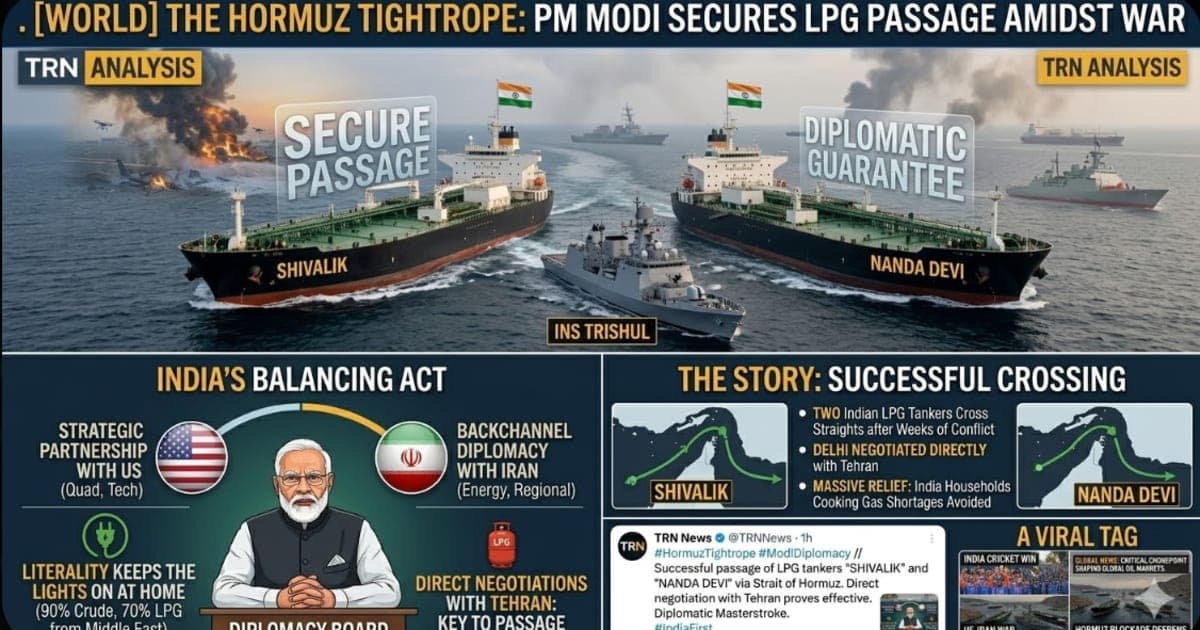
The LPG tanker Shivalik, owned by the Shipping Corporation of India, crossed the Strait of Hormuz on March 13. The Nanda Devi followed hours later. Together, they are carrying 92,712 metric tonnes of liquefied petroleum gas — enough to fill approximately 65 lakh LPG cylinders. [web:212] They arrive at Mundra and Kandla ports today and tomorrow respectively. [web:216]
Twentythree other Indian-flagged vessels are still waiting on either side of the strait. [web:218] But for the millions of Indian households who cook on LPG and were watching the crisis with genuine anxiety, two ships crossing safely is not a small thing. It is the difference between a shortage that is manageable and one that becomes a humanitarian problem.
Getting those two ships through required four rounds of phone calls, direct engagement between PM Modi and Iranian President Masoud Pezeshkian, and a parallel diplomatic track run by External Affairs Minister Jaishankar with his Iranian counterpart Abbas Araghchi. [web:216] The MEA spokesperson confirmed the approach publicly: "India has maintained close communication with essential stakeholders including GCC nations, Iran, the US, and Israel at both the ministerial and diplomatic level." [web:215]
That sentence is the diplomatic tightrope India has been walking for three weeks — and so far, it has not fallen off.
What the Diplomacy Actually Looked Like
The operation did not happen because India got lucky. It happened because New Delhi built and maintained a specific kind of relationship with Tehran over decades that gave it access no Western government currently has.
Iran's ambassador to India, Mohammad Fathali, made the logic explicit when confirming the safe passage arrangement: "The government of India helped us, and we should help the government of India because we have a common fate and common interest." [web:221] That is not the language of transactional diplomacy. It is the language of a relationship.
India-Iran ties predate the current crisis and predate the most recent sanctions cycle. India paid for Iranian oil in Rupees through special banking arrangements when dollar payments became impossible under US sanctions. India has been developing the Chabahar Port in Iran's southeast — a project with strategic value for India's access to Afghanistan and Central Asia that has proceeded despite American pressure to halt it. India has consistently abstained on UN votes that would isolate Iran, refusing to join Western-led isolation frameworks.
None of this means India endorses Iran's military posture or the Hormuz closure. What it means is that Tehran has a material interest in keeping India — one of its few remaining genuine diplomatic partners — on speaking terms. When Modi called Pezeshkian, Iran had a reason to pick up the phone. When Jaishankar called Araghchi, the conversation had a foundation that four weeks of crisis had not eroded. [web:217]
The result: a "very careful operation" — the official description from Indian government sources — in which the Shivalik and Nanda Devi crossed under a negotiated arrangement with Iranian naval forces standing down, Indian Navy escorts accompanying the vessels through the eastern exit of the strait, and what sources describe as cooperation from "other regional powers." [web:216]
The Balancing Act That Cannot Be Named Publicly
Here is the part of this story that no Indian government official will state in a press conference: successfully negotiating with Iran for safe passage, at the precise moment the US is running an active military campaign against Iran, requires India to maintain a level of communication with Tehran that its American strategic partners would prefer it did not have.
The US-India relationship is the cornerstone of India's Indo-Pacific strategy, its defence procurement pipeline, its technology transfer access, and its diplomatic positioning on China. India signed the Quad, participates in joint naval exercises with the US Fifth Fleet, and has deepened intelligence-sharing arrangements with Washington over the past decade.
Washington's official position is that the Iran conflict is about preventing a nuclear-armed Iran and protecting global shipping from IRGC aggression. From that frame, any government that negotiates bilaterally with Tehran for special treatment is implicitly undermining the coalition pressure that the US is trying to sustain.
India's position — never stated but operationally clear — is that energy security for 1.4 billion people is a sovereign necessity that it will pursue through whatever diplomatic channels are available, and that its Iran relationship is a strategic asset it will not sacrifice on the altar of Western alliance solidarity. The Rupee is at 92.3. Oil is at $105. Six more LPG tankers and one LNG tanker are waiting west of the Strait. [web:215] This is not an abstract policy debate. It is cooking gas for Indian homes.
The US has not publicly objected to India's Hormuz diplomacy. This is partly because Washington understands India's domestic constraints, and partly because an India that successfully maintains a back-channel to Tehran is diplomatically useful — it gives Washington a route for informal communication with a government it has placed under a $10 million bounty.
What Comes Next — 23 Ships Still Waiting
The Shivalik and Nanda Devi are the proof of concept. The question now is whether the mechanism that got them through can be applied at scale.
Rajesh Kumar Sinha, Special Secretary at the Shipping Ministry, confirmed that six additional LPG tankers carrying approximately 276,000 metric tonnes — roughly a month's worth of LPG supply — are waiting for passage. [web:215] Four crude oil tankers, three container ships, and two bulk carriers are also in the queue. [web:215]
India's average monthly LPG consumption in FY26 has been 2.81 million metric tonnes. [web:215] The waiting cargo represents a fraction of monthly demand, not a buffer. Every day the remaining ships are held up is a day the domestic LPG supply chain runs thinner.
The Indian Navy escort model — which accompanied both the Shivalik and Nanda Devi through open waters after Hormuz exit [web:214] — is sustainable for individual high-value transits. It cannot be scaled to cover every Indian-flagged vessel in the Gulf simultaneously without stretching naval assets that have other responsibilities in the Indian Ocean.
The diplomatic track needs to produce something more durable than vessel-by-vessel negotiation. What India is working toward — through the MEA's continued engagement with Tehran, GCC capitals, Washington, and Tel Aviv — is a framework that gives Indian-flagged ships a recognised status in the conflict zone, similar to the arrangement China has achieved for Chinese-flagged tankers.
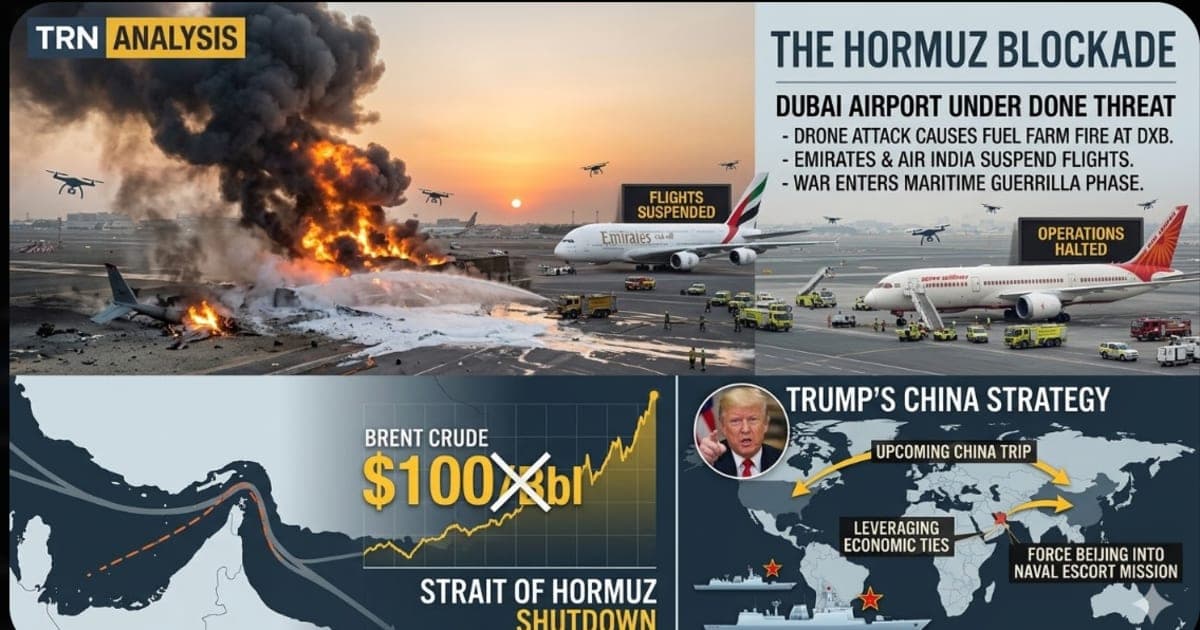
Whether that framework holds as the conflict escalates — and today's drone attack on Dubai Airport and the Fujairah oil port suggests it is escalating — is the central question for India's energy security over the next month.
The Cylinder That Made It
The Shivalik docked at Mundra today. The Nanda Devi reaches Kandla tomorrow. [web:220] The LPG in their tanks will move through the distribution network — refineries, bottling plants, last-mile delivery trucks — and reach households within the next ten to fourteen days.
Sixty-five lakh cylinders. [web:212] In a country of 1.4 billion people, that is not enough to declare the crisis over. It is enough to confirm that the diplomatic mechanism works — that India's specific, carefully maintained relationship with Tehran can, under the right conditions, move ships through a closed strait.
PM Modi made the call. Jaishankar ran the diplomatic track. The Indian Navy provided the escort. The Shivalik and Nanda Devi did the rest.
Twenty-three ships are still waiting.