Pakistan Struck Kabul, Kandahar, and Khost Today — The Border War Just Got Significantly Larger
ISLAMABAD / KABUL, March 16, 2026
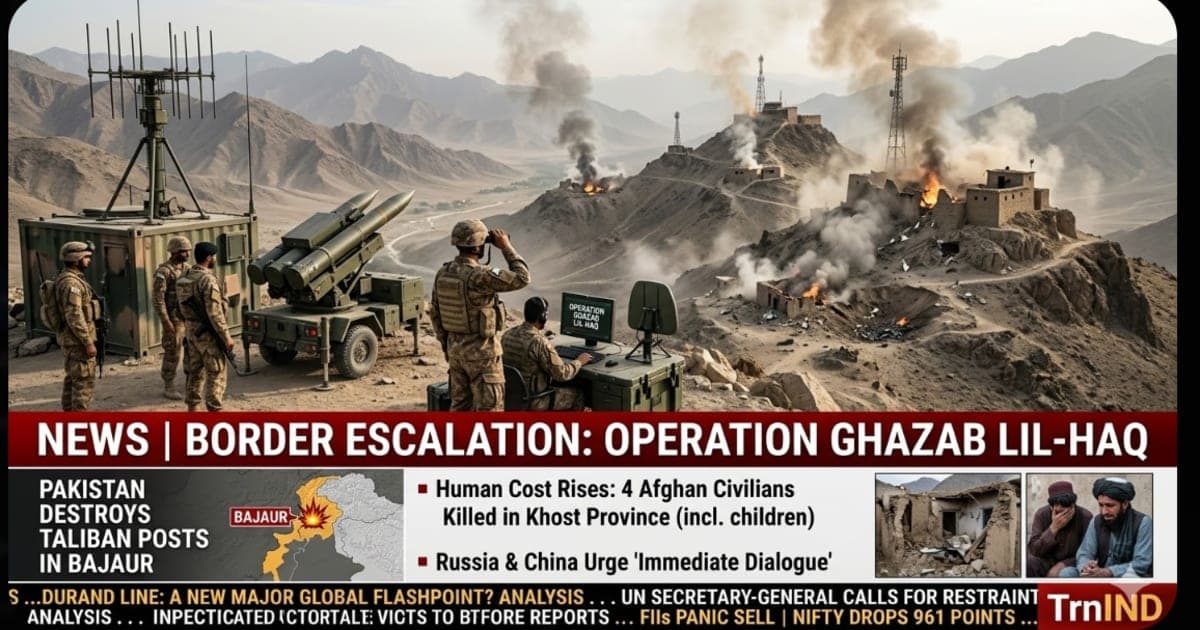
When Operation Ghazab lil-Haq launched on February 26, Pakistani officials described it as a targeted counter-terrorism operation against TTP infrastructure along the Durand Line. Eighteen days later, Pakistan is striking Kabul. The operation has transformed from a border action into something that looks, by most definitions, like a war between two sovereign states.
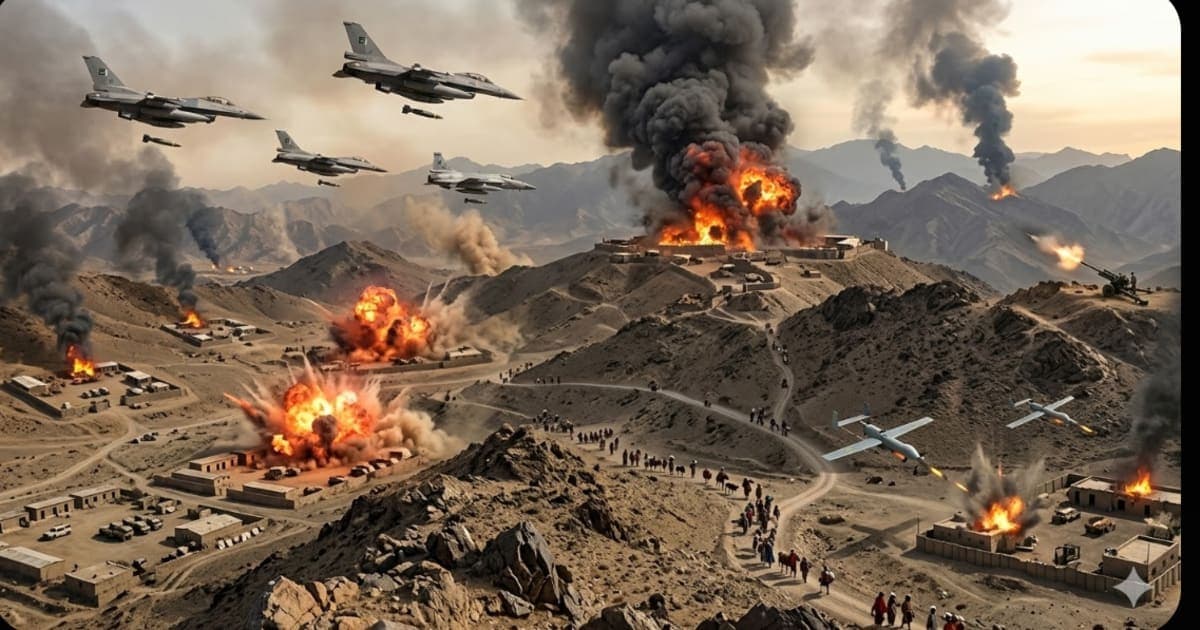
Pakistani Air Force jets conducted strikes on Taliban military infrastructure in three provinces today: Kabul, Kandahar, and Khost. The targets described by Pakistan's military spokesman include weapons storage facilities, command coordination centres, and drone launch infrastructure. Kabul province had not previously been a strike zone. Hitting the capital province of a neighbouring country, regardless of the stated justification, is an escalation of a different order than striking border districts.
Afghanistan's response was not symbolic. Taliban forces launched what Pakistani military sources are calling "kamikaze" drone attacks — one-way explosive UAVs — against Pakistani military outposts in the Kohat district of Khyber Pakhtunkhwa. Kohat is not a border town. It sits approximately 50 kilometres inside Pakistani territory. The Taliban's drone capability reaching Kohat means the conflict's geographic footprint has now expanded on both sides of the Durand Line simultaneously.
Why Today's Escalation Is Different
The strikes on Kandahar and Khost were part of the established Operation Ghazab lil-Haq pattern — targeting provinces that border Pakistan's tribal belt and that have hosted TTP infrastructure for years. Pakistan had struck these areas before. The strikes were severe but not architecturally new.
The Kabul strikes are new.
Kabul is the seat of the Afghan Taliban government. It is where the IEA's ministries operate, where the Taliban's senior leadership lives, where Afghanistan's administrative and political functions are centralised. Striking Kabul province is striking the capital of a state — a state that is internationally unrecognised but functionally sovereign over 40 million people. Every government in the region and beyond will read today's Kabul strikes as a qualitative escalation that changes the diplomatic calculus of this conflict.
Pakistan's official justification: the Kabul strikes targeted "technical support infrastructure" and drone coordination facilities that have been directing attacks on Pakistani territory. The logic is counter-force — destroy the capability that is producing the threat. The problem with that logic in this context is that it requires Pakistan to conduct strikes inside the capital province of its neighbour, which every international law framework treats as an act of war against a sovereign state, regardless of the target justification.
The Drone War Inside Pakistan's Territory
The Taliban's Kohat drone strikes deserve specific attention because they reveal a capability evolution that Pakistan's military planners did not fully anticipate.
When Pakistan launched Ghazab lil-Haq, the assumption was that superior Pakistani airpower and artillery would dominate the tactical environment — the Taliban could fire across the border, but Pakistan could strike deeper and more precisely. The Kohat drone strikes challenge that assumption. If the Taliban can reliably strike 50 kilometres inside Pakistani territory with explosive UAVs, then Pakistani military installations, logistics hubs, and potentially civilian infrastructure in KP are within their operational reach.
The "kamikaze drone" — a one-way loitering munition — is the asymmetric weapon of the 2020s. Ukraine demonstrated what cheap one-way drones do to conventional military infrastructure. The Taliban, operating in terrain they have navigated for decades and with access to commercial drone technology, has adapted the lesson. For Pakistan's military, the Kohat strike is a warning that the cost of this operation may extend well beyond the border districts.
Russia, China, and the Joint Call Nobody Is Listening To
Russia and China issued a joint statement today calling for "immediate dialogue" and warning that a full-scale Pakistan-Afghanistan war risks destabilising the entire South Asian region.
It is the strongest language either country has used since the operation began. It is also, functionally, being ignored by both Islamabad and Kabul — for the same structural reasons that have made every previous de-escalation call ineffective.
China's leverage over Pakistan is real: CPEC represents $65 billion in investment, and Beijing has significant influence over Pakistan's economic lifeline through the IMF process where Chinese positioning matters. But using that leverage to force Pakistan to stand down while Taliban-backed TTP attacks continue inside Pakistani territory is a demand Islamabad cannot accept domestically. The Pakistani military's credibility — the institution's core justification for its political role — depends on demonstrating that attacks on Pakistani soil produce a military response.
Russia's leverage over the Taliban government is limited. Moscow established early diplomatic relations with the IEA, has commercial interests in Afghan mineral extraction, and has maintained back-channel communication with Taliban leadership. But Russia cannot tell the Taliban to accept Pakistani demands under military pressure without the Taliban losing face in front of the domestic constituency that defines their legitimacy.
The joint Russia-China call is significant as a diplomatic signal. It tells both parties that their two most important non-Western backers view the current trajectory as dangerous and want it to stop. It does not, by itself, provide either party with a face-saving mechanism to actually stop.
Turkey and the UN — The Mediation Gap
Turkey remains the most credible potential mediator with genuine access to both parties. Ankara has maintained functional relations with the Taliban government, has a defence relationship with Pakistan, and has been actively offering its services since week one of the conflict. The offer has not been formally accepted by either side.
The UN Special Representative for Afghanistan, Roza Otunbayeva, has been in contact with Taliban officials and has urged restraint. The UN does not recognise the Taliban as the legitimate government of Afghanistan — which creates the absurd diplomatic situation where the primary international body calling for de-escalation cannot officially negotiate with one of the two parties to the conflict.
115,000 displaced Afghans are the direct human cost of eighteen days of conflict. That number will rise with today's expanded strikes. WFP emergency operations are distributing high-energy biscuits and basic rations in eastern Afghanistan. Road access to several affected districts remains blocked by debris and active military movement.
The CPEC Question Nobody Is Answering
The China-Pakistan Economic Corridor runs through the heart of the territory that is now a conflict zone. Northern CPEC infrastructure in KP, the Karakoram Highway corridor, and the security arrangements protecting Chinese workers at project sites are all operating under conditions that were not part of any risk assessment when the projects were designed.
Beijing has been notably quiet on the CPEC implications in its public statements — the joint call with Russia focused on regional stability rather than infrastructure protection. Privately, Chinese officials have communicated significant concern about the security environment. The Kohat drone strikes today, if they recur, put infrastructure corridors that are 50-100 kilometres from the border inside the Taliban's demonstrated operational range.
A Pakistan-Afghanistan war that continues for another month will produce CPEC delays, Chinese worker evacuations, and insurance cost increases that reshape the project economics of the entire corridor. Beijing knows this. It is the most concrete pressure point China has to push Islamabad toward a negotiated settlement — and Beijing has not yet chosen to use it publicly.
Until it does, or until Turkey's mediation offer is accepted, or until the economic cost of the operation becomes politically unsustainable in Islamabad, the airstrikes will continue and the drones will keep flying toward Kohat.