The Ships That Made It Through
MUNDRA / KANDLA, March 14, 2026
Two ships cleared the Strait of Hormuz this morning and nobody in the crew slept while they did it.
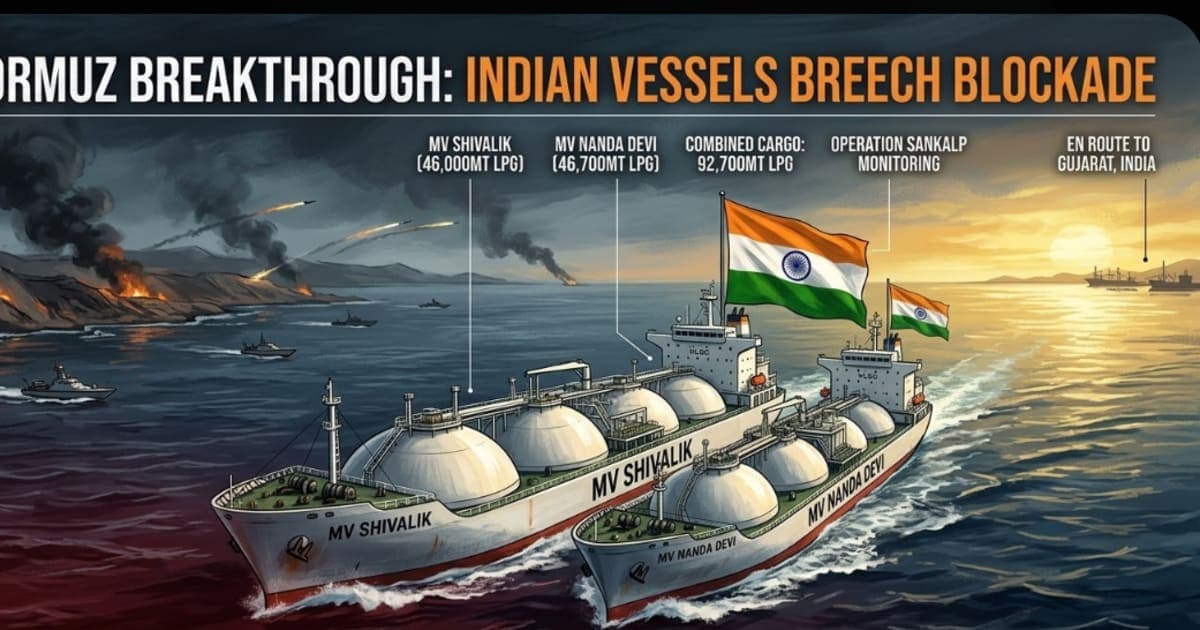
The MV Shivalik and MV Nanda Devi — Indian-flagged LPG carriers operated by the Shipping Corporation of India — completed their transit of the Strait of Hormuz in the early hours of March 14 and are now in open Arabian Sea waters heading for Gujarat. The Shivalik is expected at Mundra Port on March 16. The Nanda Devi follows at Kandla on March 17.
Combined cargo: 92,700 metric tonnes of LPG. Enough to fill approximately 6.5 million domestic cooking gas cylinders. For a country where over 300 million households cook on LPG, and where domestic supply chains have been under severe strain since the strait effectively closed on February 28, these two ships are not a commercial transaction. They are a pressure valve.
How They Got Through
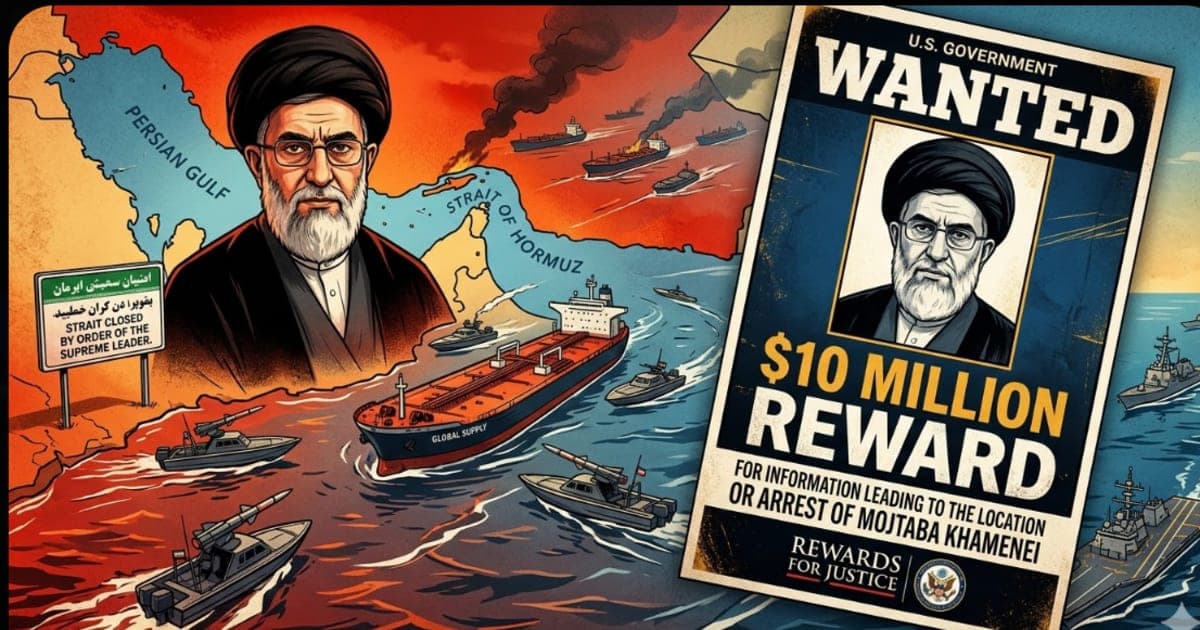
The United States is offering a $10 million bounty on Mojtaba Khamenei. European vessels are being turned back or targeted. American military assets in the strait are focused on preventing mine-laying rather than escorting commercial traffic. Israel-linked vessels are explicitly threatened.
India's ships sailed through this morning.
That outcome is the result of roughly ten days of what the MEA is calling "engagement" — four rounds of high-level phone calls, direct outreach from Prime Minister Modi to Iranian President Masoud Pezeshkian, and marathon sessions between External Affairs Minister Jaishankar and his Iranian counterpart Abbas Araghchi. The Indian diplomatic argument was consistent throughout: India is a neutral party in the 2026 Iran War. It has no military involvement. It has no sanctions posture against Iran. It has a civilian population that needs cooking gas to function.
The Iranian response, as confirmed today by Dr. Abdul Majid Hakeem Ilahi — the representative of the Iranian Supreme Leader in India — was direct:
"We believe that Iran and India are friends. We have common interests and a common fate. We have tried to provide an opportunity for Indian ships to cross because we are mindful of the energy needs of our brothers and sisters in India."
That statement is significant not just as diplomatic language but as a public confirmation that the passage was specifically granted to Indian vessels — and that the framework for future transits exists, at least in Iran's current position.
What it establishes in practice: Indian-flagged ships can request clearance from the IRGC and, if granted, transit the strait. Ships from the U.S., EU, and Israeli-linked operators cannot. This is not freedom of navigation. It is a negotiated bilateral exemption operating inside a blockade. The distinction matters legally and diplomatically — but it is what is keeping Indian LPG moving right now.
What the Crews Actually Experienced
The diplomatic clearance did not make the crossing routine.
The Indian Navy has been running Operation Sankalp — its mission to protect Indian shipping in the Gulf of Oman — since 2019. For the Shivalik and Nanda Devi's transit, naval assets including stealth frigates and P-8I maritime surveillance aircraft maintained continuous close-in protection. The P-8Is are particularly significant — they can track surface vessels, detect submarine activity, and monitor IRGC fast-attack boats operating in the strait.
A senior Shipping Corporation of India official described the protocols the crews operated under:
"We moved with extreme caution. The crews were briefed on 'dark mode' protocols — switching off AIS for certain segments to avoid being targeted by non-state actors or accidental engagement by coalition forces."
AIS — the Automatic Identification System — is the maritime equivalent of an aircraft transponder. Commercial vessels are legally required to broadcast AIS under international maritime rules. Switching it off means the ship disappears from maritime tracking systems. It is done when the risk of being a visible target exceeds the risk of being invisible. The fact that Indian crews were operating in AIS-off conditions through sections of the transit tells you what the strait actually looks like right now regardless of diplomatic clearance.
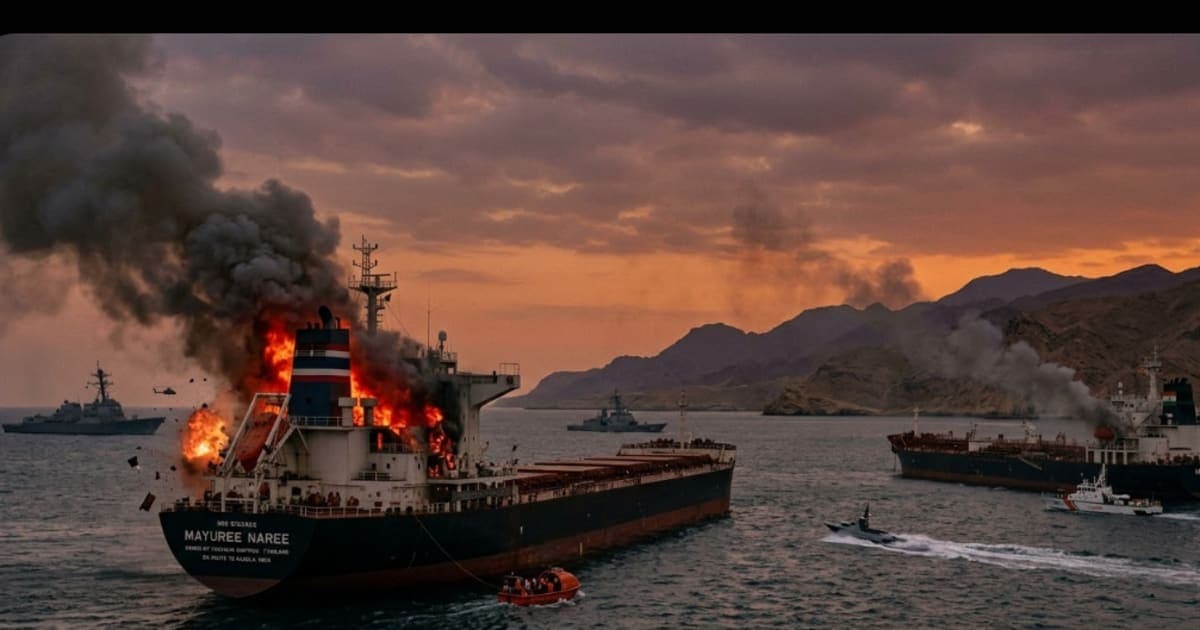
The Musandam Peninsula — the narrow section of Oman that juts into the strait, around which vessels must navigate at the most confined point — is currently active with IRGC fast-attack boats and what maritime security agencies describe as "smart" mines. The Indian Navy's over-the-horizon monitoring means that any approaching vessel is identified before it gets close. But the crews on the Shivalik and Nanda Devi spent the transit knowing that identification and response are not the same as guaranteed safety.
They made it. That is the outcome.
The Inventory Reality — What "Adequate" Actually Means
Sujata Sharma, Joint Secretary at the Ministry of Petroleum and Natural Gas, addressed an inter-ministerial briefing this evening and said what governments always say in these situations: there is no crisis, don't panic, supplies are adequate.
The fuller picture is more nuanced.
India holds LPG and crude oil inventories — the exact strategic reserve figures are not publicly disclosed in granular detail, but the government has consistently said "several weeks" when pressed. The US and Canadian LNG imports being used as an alternative source take 45 days to arrive from loading to Indian port, compared to 12 days on the Gulf route. That arithmetic means every day the strait was fully closed was a day the inventory buffer was being drawn down with no equivalent replacement arriving.
The Shivalik and Nanda Devi crossing today means that buffer stops shrinking on that supply line. It does not mean the crisis is over. There are still 22 Indian-flagged vessels and more than 600 Indian seafarers stranded on the western side of the strait in the Persian Gulf, waiting for their own clearances. Each of those ships carries cargo that India needs. The diplomatic framework that got the first two through needs to be applied and maintained for the remaining 22.
To manage the demand side while supply is constrained, the government has enforced a 25-day booking gap for urban LPG households and a 45-day gap for rural ones. Twenty-nine states and union territories have begun prioritised distribution of commercial cylinders to keep the food and industrial sectors operating. These measures are working in the sense that there is no physical "dry out" at distribution centres. They are creating friction and hardship for commercial operators who were already absorbing the cost of the commercial LPG shortage.
The 15% spike in panic booking that urban centres reported in the past 48 hours is the consumer-level expression of anxiety that the government's "adequate inventory" messaging has not fully suppressed. The Shivalik and Nanda Devi news today will help that. Whether it is enough to stop the panic booking depends partly on what happens with the 22 remaining stranded vessels in the next 48 hours.
India's Position — Uncomfortable and Necessary
The visual that nobody in the Western alliance is comfortable with: Indian ships are moving through a blockade that U.S., EU, and Israeli vessels cannot breach.
India is not doing this to embarrass its Western partners. It is doing it because 300 million Indian households need cooking gas and the alternative is a 45-day transit from North America that cannot substitute for Gulf supply at the volumes India needs. The diplomatic architecture that produced this exemption — strategic autonomy, maintained Iran engagement, refusal to impose sanctions — is not a foreign policy vanity. It is the operational mechanism that is keeping Indian gas supplies moving today.
That does not make the position comfortable. The U.S. is offering a $10 million bounty on the Iranian Supreme Leader whose "friendship clause" is allowing Indian ships to sail. India is simultaneously expressing solidarity with international efforts to restore freedom of navigation while benefiting from bilateral terms that those efforts explicitly cannot produce for Western nations. Both of these things are true. The tension between them is real and it will grow as the conflict continues.
What India is also is one of the few credible intermediary powers left in this conflict. With Western diplomacy frozen by the bounty announcement and the direct military involvement of U.S. forces, and with China pursuing its own bilateral channels with Iran, India occupies a narrow but real space as a party that both sides will still take calls from. Whether that space can be used to advance a broader ceasefire conversation — rather than just securing individual bilateral exemptions — is the strategic question that the coming weeks will test.
The 600 Seafarers Still on the Other Side
The Shivalik and Nanda Devi making it through is genuinely good news. It should be reported as such.
And then the next question has to be asked. There are 22 Indian-flagged vessels still stranded in the Persian Gulf. More than 600 Indian seafarers on those ships, waiting. The diplomatic clearance framework that worked for the Shivalik and Nanda Devi needs to work for each of those 22 ships, one by one, as they apply for and receive IRGC transit authorisation.
That process is ongoing. It is not guaranteed. The IRGC is not operating a consistent, rule-bound clearance system — it is making political decisions about which vessels to allow through based on calculations that can change. The "friendship clause" that Dr. Ilahi described today is an expression of political goodwill, not a binding legal framework.
Maritime labour unions that have been meeting with India's Director General of Shipping are not waiting for reassurance. They are asking for the same outcome for the remaining 22 ships that was achieved for the first two. That is the right demand. It is what the government should be working toward from tomorrow morning.
What March 16 and 17 Look Like
On March 16, the MV Shivalik docks at Mundra. It begins unloading 46,000 metric tonnes of LPG into Gujarat's supply chain. On March 17, the Nanda Devi arrives at Kandla with 46,700 more.
The combined cargo starts filling cylinders. Distribution networks that have been running on reduced allocation begin to recover some buffer. The 29 states with prioritised commercial distribution plans get some additional volume to work with.
It is not enough to end the shortage. It is enough to hold the situation stable while the government works the remaining clearances for the 22 stranded vessels and the alternative North American supply routes continue their 45-day journey.
For the crews of the Shivalik and Nanda Devi — who spent last night navigating a war zone in AIS-off conditions, with naval aircraft overhead and fast-attack boats in the water around them, carrying cargo that a significant portion of India's population depends on — arrival in Gujarat in two days will be the end of a transit that will not receive the recognition it deserves.
They got through. The gas is coming. The work continues.