Indian Sailors Are Dying in the Gulf — and 23,000 More Are Still Out There
The war has a body count that isn't being counted in the headlines.
When coverage focuses on missile barrages over Tel Aviv, Iranian nuclear sites, and oil prices hitting new records, the people who actually move the world's energy supply from one place to another tend to disappear from the story. They're crew members on tankers and bulk carriers. They work in engine rooms and on open decks in waters that have become active war zones. India supplies roughly 12% of the global maritime workforce. Right now, a significant number of those people are in the Gulf of Oman and the Strait of Hormuz, and some of them are not coming home.
Here's what has actually happened to those ships, those sailors, and what India is doing about it.
The Mayuree Naree — March 11, 2026
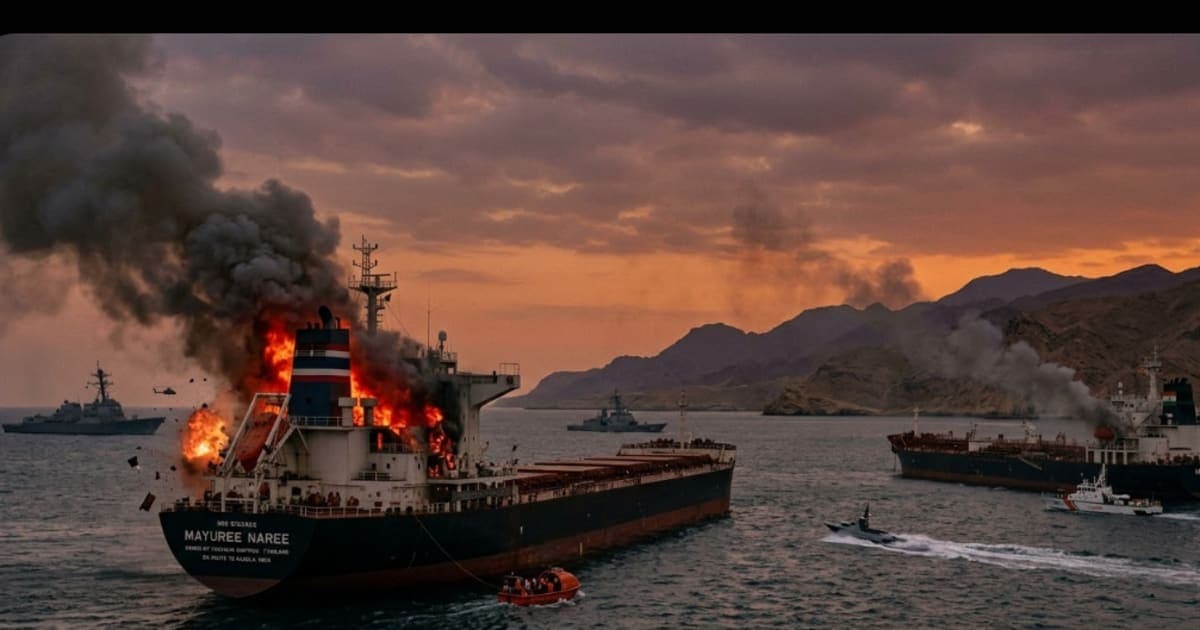
The Mayuree Naree is a Thai-flagged bulk carrier owned by Bangkok-based Precious Shipping. On March 11, it departed Khalifa Port in the UAE loaded with cargo and set course for Kandla Port in Gujarat — a routine commercial transit that ships do through the Strait of Hormuz hundreds of times a month.
Iran's IRGC claims the ship ignored direct warnings from their naval forces to halt. Whether that is accurate, disputed, or post-hoc justification for an attack on a civilian vessel is not yet independently verified. What is confirmed: the ship was struck by an Iranian projectile near its stern. The explosion ignited a severe fire in the engine compartment. The 178-meter vessel was burning in one of the most strategically sensitive waterways on the planet.
The Royal Navy of Oman coordinated the rescue operation. Twenty crew members made it off the burning ship on life rafts and were recovered. Three Thai sailors who were working in the engine room at the moment of the explosion are missing. The vessel was too severely damaged and too dangerously on fire to allow rescue teams to reach the engine compartment. As of current reporting, those three sailors are presumed trapped.
India's Ministry of External Affairs issued a statement condemning the attack on a commercial vessel in international waters. The language was direct. The condemnation was warranted. The Mayuree Naree was not a military target. It was a bulk carrier going to Gujarat.
MKD VYOM — An Indian Mariner Is Dead
The Mayuree Naree attack generated the most attention because it happened on March 11 and the ship was India-bound. But the deadlier attack for Indian families happened earlier in March.
The MKD VYOM is a Marshall Islands-flagged oil tanker. It was approximately 52 nautical miles off the coast of Muscat in the Gulf of Oman, carrying nearly 60,000 metric tons of cargo, when it was struck by an explosive-laden unmanned drone boat — the same tactic Iran and its proxies have used repeatedly throughout the conflict to target commercial shipping.
The explosion hit the engine room. Fire followed. Twenty-one crew members were evacuated, including 16 Indians, who were transferred to a commercial vessel that responded to the distress signal.
One Indian crew member did not make it off the ship. Dixit Amratlal Solanki. He was in the engine room. He was working. He died because his ship was in the wrong waterway during a war he had no part in.
Additional Indian casualties from the strike have been reported though not all named publicly at the time of writing. Maritime labor organisations in India are compiling the full toll.
MT Skylight and the Sonangol Namibe
These are not the only vessels. The attacks have been continuous.
The MT Skylight, a Palau-flagged oil tanker, was attacked near Khasab Port in Oman. Two Indian crew members died: Captain Ashish Kumar and oiler Dalip Singh. A ship's captain and an oiler — the most senior and one of the most junior roles on a vessel — both killed in the same attack.
The Sonangol Namibe, a Bahamas-flagged crude oil tanker, was targeted near Iraq's Khor al Zubair port by an Iranian remote-controlled boat packed with explosives. Ten Indian seafarers were on board. Current reporting confirms the attack; casualty details are still being compiled.
Four vessels attacked. Multiple Indian nationals confirmed dead. Sixteen rescued from one ship alone. And there are 23,000 Indian seamen currently working in Gulf waters.
What the Strait of Hormuz Is Now
The geography of this crisis matters. The Strait of Hormuz is 55 kilometres wide at its narrowest. It connects the Persian Gulf to the Arabian Sea. Through that 55-kilometre gap moves roughly 31% of the world's global oil shipments and a significant share of global LNG.
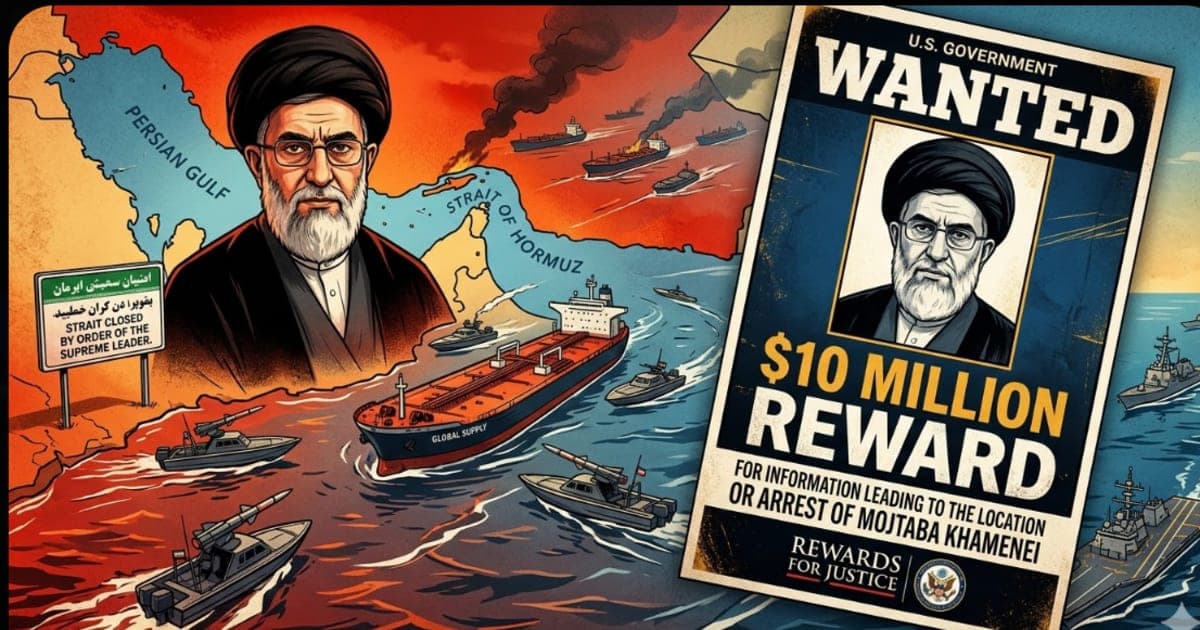
Iran has geographic control over the northern shore. The IRGC has now mandated that all commercial vessels must obtain explicit Iranian permission to cross the strait. Ships that transit without that clearance are, according to the IRGC, subject to attack.
The practical result: hundreds of tankers and cargo ships are currently anchored in open water outside the strait, unable or unwilling to attempt the transit. The alternative route — around the Cape of Good Hope — adds two to three weeks to the journey and significantly increases freight costs. Those costs are passed through supply chains and arrive in price increases on goods that people buy.
The UN Security Council has condemned the attacks and declared the blockade a severe threat to international peace and security. Condemnation from the Security Council does not reopen a maritime chokepoint. The IRGC has not adjusted its position in response to that statement.
What India Is Doing
India's position in this crisis is genuinely complicated.
On one side: India gets approximately 85% of its crude oil from imports, and the Middle East accounts for roughly 60% of that. Any sustained closure of the Strait of Hormuz is not an abstract economic risk for India — it is a concrete pathway to energy shortages, fuel price spikes, and downstream inflation that would hit 1.4 billion people.
On the other side: India has maintained diplomatic relationships with Iran that other Western nations have not. That relationship is now being used.
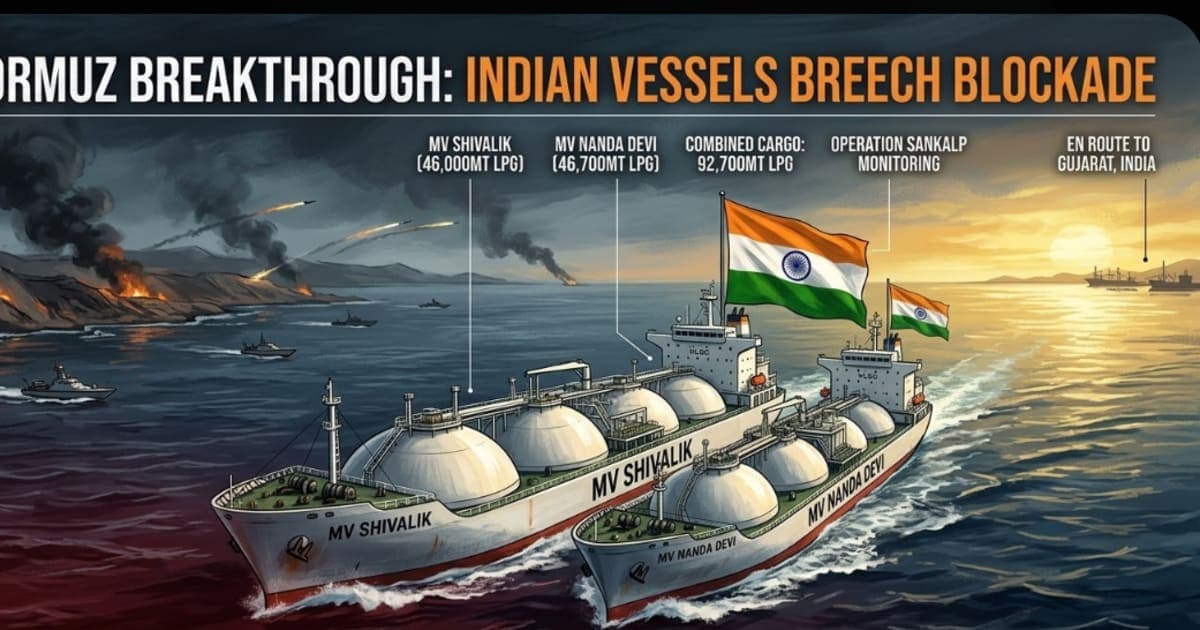
External Affairs Minister S. Jaishankar has been in direct contact with Iranian counterparts. According to diplomatic sources, those conversations have resulted in Iran agreeing to grant clearance for Indian-flagged vessels to transit the strait. That's a significant outcome — if it holds. It means India has negotiated a partial exemption from a blockade that is costing every other nation's commercial shipping either delay or danger.
Simultaneously, India is in discussions with the United States about potential naval escort mechanisms for oil tankers transiting the region, and about insurance frameworks — because Lloyd's of London and other major maritime insurers have dramatically increased war-risk premiums for Gulf transit, to the point where the insurance cost alone is making some voyages economically unviable.
India's Director General of Shipping has been meeting with maritime labour organisations who are demanding immediate protective measures for Indian crew members still working in the region. The demand is reasonable. The mechanism for delivering it is not straightforward — the Indian Navy cannot escort every commercial vessel carrying Indian crew members through a war zone.
The People in the Engine Rooms
Dixit Amratlal Solanki. Captain Ashish Kumar. Dalip Singh.
These are the names that have been confirmed. There are families in India who got phone calls this week that no family should receive. Maritime labour unions are demanding that the government treat the protection of Indian seafarers in active conflict zones as a national emergency rather than a diplomatic side consideration.
That demand is legitimate. India is one of the largest suppliers of maritime labour in the world. The men and women who crew the world's tankers and bulk carriers are doing essential work that keeps energy and goods moving across the planet. When a war zone expands into the waters they have to work in, their government has a specific responsibility to them — not just a general condemnation of the attacks that killed their colleagues.
The full casualty picture from these attacks is not yet complete. Maritime incidents in active conflict zones take time to fully document. What is already confirmed is enough to demand a response that goes beyond statements.
What Comes Next
The Strait of Hormuz has been threatened with closure before. It has never been fully closed. The economic consequences of a sustained closure — to oil markets, to global food supply chains, to every economy dependent on Gulf energy — are severe enough that powerful interests on multiple sides have historically pulled back before the worst outcomes materialized.
Whether that logic holds in a conflict involving direct U.S. military action against Iran, a new Iranian Supreme Leader with uncertain institutional legitimacy, and an IRGC operating under maximum retaliation orders is the question that energy traders, naval strategists, and diplomatic back-channels are all trying to answer simultaneously.
For the 23,000 Indian sailors currently in those waters, the abstract geopolitics are irrelevant. They are in a war zone. The people who sent them there — the shipping companies, the cargo owners, the fuel importers — have a commercial interest in the cargo completing its journey. The sailors have a rather more fundamental interest in staying alive.
Both of those interests currently require navigating a 55-kilometre strait where Iran is attacking ships that it decides have not followed its rules.
That is the situation. It has no clean resolution in the next 48 hours. It needs to be named clearly.