India and Iran: The Relationship That a Burning Ship Just Broke Open
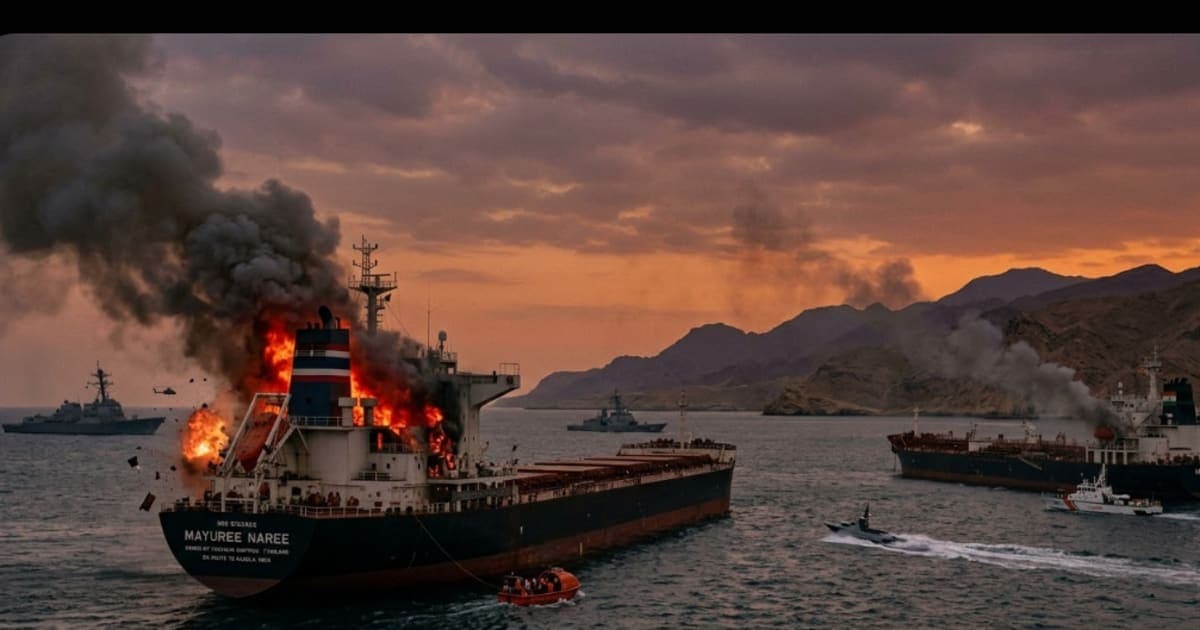
There's a cargo ship on fire in the Strait of Hormuz. An Indian sailor is dead in the Gulf of Oman. And in New Delhi, the foreign policy establishment is looking at a relationship it has spent decades carefully building and realising that the assumptions underneath it no longer hold.
The India-Iran relationship has never been simple. It has been managed — with considerable skill — as one of the more complex bilateral relationships in Asia. Energy dependence on one side. Strategic infrastructure on the other. American pressure in the background. Israeli closeness on another axis. Iranian pragmatism threading through all of it.
March 2026 has stress-tested every single one of those assumptions simultaneously. Some of them have not survived the test.
The Energy Dependency India Cannot Pretend Away
Let's start with the number that frames everything else.
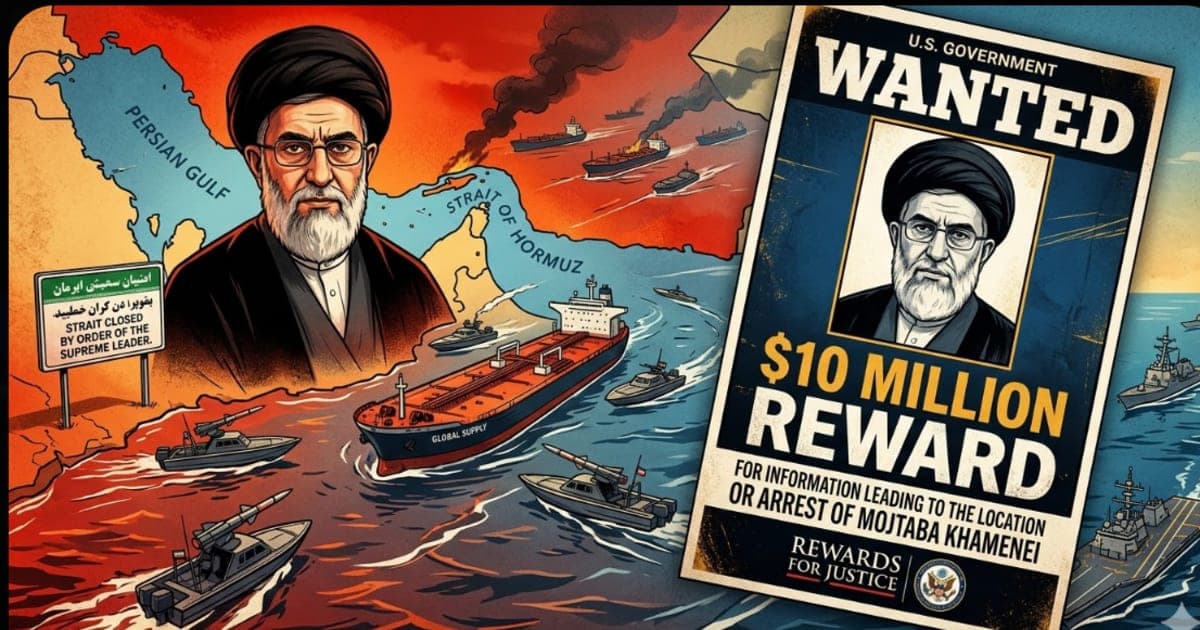
India sources 91% of its LPG imports from the Gulf region. Not a majority. Not most. Ninety-one percent. Nearly all of it transits the Strait of Hormuz. When Iran effectively imposed a blockade on that strait — attacking vessels that didn't obtain IRGC permission to cross, mandating clearance for all commercial traffic — India did not face an abstract energy security risk. It faced a concrete, immediate crisis.
The consequences were not slow. LPG prices in India rose ₹60 per cylinder within days. Brent crude surged past $120 per barrel. The government invoked the Essential Commodities Act and began rationing gas allocation — protecting household PNG and CNG at the cost of commercial and industrial users. Restaurants started closing. Fertilizer plants dropped to 70% capacity ahead of sowing season. The chain reaction from a burning ship in the Hormuz to a dhaba shutting in Bhopal took approximately seventy-two hours.
This is the vulnerability that India has known about theoretically for years, that every energy security paper has flagged, that every budget cycle has promised to address through diversification. It is now documented reality rather than projection. The accelerated push to source energy from Africa, North America, and potentially Latin America — which was a medium-term strategic aspiration before March 2026 — is now an emergency priority. Iran's role as a primary energy provider for India will be smaller on the other side of this crisis, by necessity rather than choice.
Chabahar — A Strategic Vision in Suspended Animation
The Chabahar Port project is the physical embodiment of what India wanted the Iran relationship to become.
Located in southeastern Iran, Chabahar was designed as India's strategic workaround — a way to reach Afghanistan and the landlocked markets of Central Asia without passing through Pakistani territory. It represented years of diplomatic investment, significant financial commitment, and a clear articulation of India's independent strategic vision: that New Delhi could build connectivity infrastructure with Iran, maintain close ties with the U.S. and Israel, and somehow manage all three relationships without any of them collapsing.
The project was already showing cracks before the war. In the most recent Union Budget, India allocated zero funds for Chabahar. Tehran noticed. Iranian officials expressed what was diplomatically described as "disappointment" — but the message was direct: India was deprioritising the project under U.S. sanctions pressure, and Iran saw it as a signal of where Indian strategic priorities actually sit when they're forced to choose.
Then the attacks began. And the strategic logic for a massive, long-term infrastructure investment in a country that is simultaneously blockading your energy supply routes and killing your citizens becomes genuinely difficult to articulate.
The honest position in March 2026 is that Chabahar is in a state of strategic paralysis. The vision is intact — connectivity to Central Asia via Iran remains geographically compelling. The execution is frozen. Investing further in a country you're simultaneously condemning at the UN Security Council, while American allies are bombing its capital, and while its military is attacking vessels carrying your sailors, requires a degree of compartmentalisation that even India's formidable diplomatic tradition will struggle to sustain.
There are Iranian opposition voices who have floated the idea of a post-regime revival of Chabahar — a scenario in which regime change in Tehran creates an opening for a reset on the project. That's speculative. What's not speculative is that Chabahar, the cornerstone of India's "Connect Central Asia" policy, is not moving forward under current conditions.
The Geometry of Strategic Autonomy Under Pressure
India's foreign policy has, for two decades, been built on a specific form of geometric sophistication. The argument is that New Delhi can maintain deepening defence and technology ties with the United States, cultivate an exceptionally close relationship with Israel, sustain vital economic relationships with Gulf monarchies, and preserve a strategic pivot in Tehran — all simultaneously, by never fully committing to any single axis and always prioritising Indian national interest over alliance loyalty.
This geometry has worked. It has produced real outcomes. The India-U.S. defence relationship is closer than any Cold War-era observer would have predicted. India's technology access from Israel is significant. Gulf investment in India is substantial. The Chabahar agreement with Iran got done despite American pressure.
March 2026 is testing whether that geometry can survive contact with an actual war.
The contradiction is no longer abstract. India has deep defence and technology ties with Israel. Iran is attacking India-bound ships and killing Indian sailors. These two facts cannot be reconciled within a single policy framework without acknowledging the tension between them. India condemning the attacks while sustaining the relationship — the standard diplomatic formula — works in low-intensity disputes. It becomes harder to maintain when Indian citizens are dying and the Indian public is watching.
Simultaneously, American pressure on India to reduce its engagement with Iran has been building for years. The Chabahar budget allocation — or the absence of one — is partly a response to that pressure. India has been gradually hedging away from the Iranian axis under U.S. influence while maintaining the public position that strategic autonomy remains intact. The war has compressed that gradual hedging into a moment of forced clarity.
Strategic autonomy, when a "strategic partner" is blockading your energy routes and killing your sailors, starts to look less like independence and more like an inability to act. The domestic political pressure on the government to do something visible and decisive is real. The problem is that every visible, decisive action on this issue breaks one component of the diplomatic framework India has spent years building.
What Jaishankar Is Actually Navigating
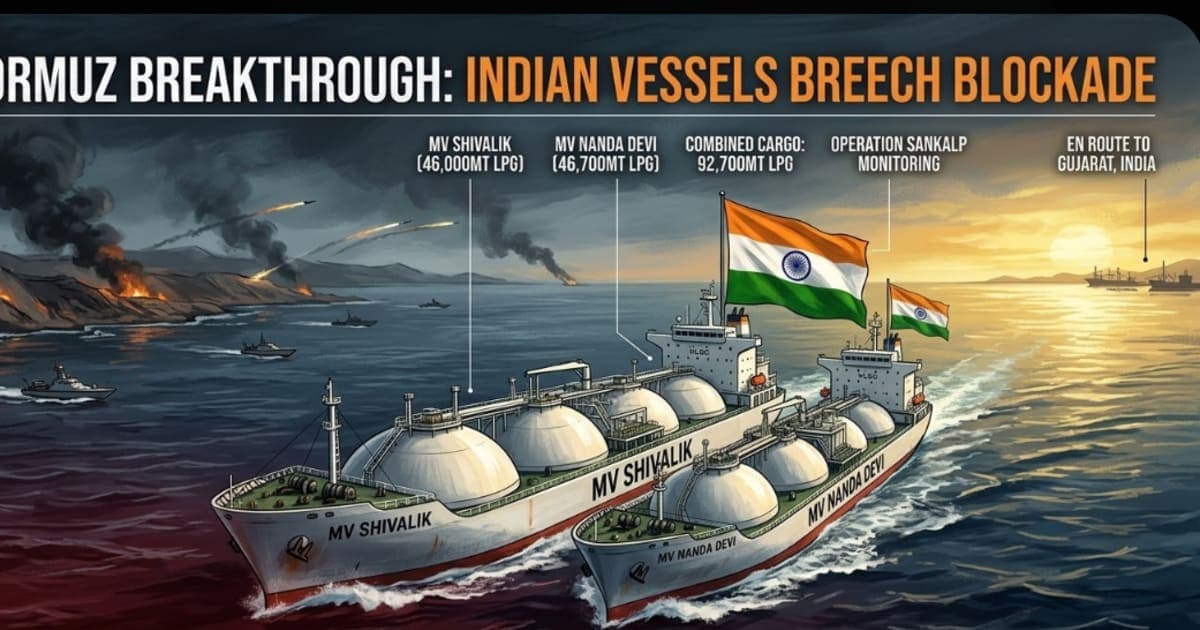
External Affairs Minister Jaishankar has reportedly secured one tangible outcome from the crisis so far: Iranian agreement to grant clearance for Indian-flagged vessels to transit the Strait of Hormuz. If that holds, it is a meaningful achievement — a partial exemption from a blockade that is costing every other nation's commercial shipping either delay or danger.
But the significance of that outcome should be understood clearly. India had to negotiate with Iran for the right to use an international waterway. The freedom of navigation principle — that commercial vessels have the right to transit international straits without seeking permission from bordering states — is one of the foundational principles of international maritime law. India obtaining clearance is pragmatic and necessary in the current crisis. It is also an implicit acknowledgment that Iran currently controls access to a waterway India depends on for its survival.
The negotiations with the United States about naval escort mechanisms and insurance frameworks for Gulf transit are ongoing. Lloyd's of London and other major maritime insurers have dramatically raised war-risk premiums for the region. Some voyages are currently economically unviable on insurance costs alone, before the physical risk is factored in. Working out a mechanism that makes Gulf transit insurable and protected is a weeks-long, multi-party problem with no clean solution.
The Human Dimension — What the Government Owes Its Sailors
The strategic analysis matters. So do the names.
Dixit Amratlal Solanki. Captain Ashish Kumar. Dalip Singh.
These are Indian citizens who died in the Gulf this month doing work that keeps the world's energy supply moving. They were not combatants. They were crew members in engine rooms and on tanker decks. They died because the waters they had to work in became a war zone.
Maritime labour unions in India are not asking for a geopolitical solution. They are asking for something more immediate: protective measures for the 23,000 Indian nationals currently working in Gulf waters, safe corridors where those can be established, and a government posture that treats the protection of its maritime workers as a national security priority rather than a diplomatic side note.
The government's response to that demand will be watched carefully. India's maritime workforce is not a small or politically invisible constituency. It is a highly skilled, globally significant labour force whose safety is now directly at stake in a war India did not start and cannot easily influence.
The Status Quo Is Gone
The India-Iran relationship that existed before March 2026 was built on a specific architecture: energy dependence managed through strategic engagement, Chabahar as the long-term connectivity vision, and strategic autonomy as the diplomatic framework that made the whole thing coherent.
That architecture is damaged. Not destroyed — relationships of this depth and duration do not simply end — but damaged in ways that require genuine structural repair rather than diplomatic maintenance.
The energy dependence has been exposed as a national security liability. Chabahar is frozen. Strategic autonomy is being tested in the most direct way possible — not through sanctions pressure or diplomatic friction, but through the deaths of Indian citizens and the disruption of India's most critical supply chains.
What comes next will not be a return to the previous relationship. It will be something new — shaped by the choices India makes in the next weeks and months about how to respond to what has happened, what it demands from Iran diplomatically, how it manages American expectations, and whether it can rebuild a relationship framework that acknowledges the new reality rather than pretending the old one still works.
The burning ship in the Hormuz is not just a maritime incident. It is the visible break point between a foreign policy approach that worked in a more stable world and the more direct, harder choices that a multi-polar, multi-front, multi-crisis world is now demanding.
India's foreign policy establishment is capable of making those harder choices. March 2026 is when they will have to start.