Iran War Update Today: Ceasefire Rejected, New Supreme Leader, and No End in Sight
NEW DELHI / TEHRAN / WASHINGTON, March 9, 2026 — Nine days into Operation Epic Fury, the war between the United States, Israel, and Iran has not moved closer to its end. It has moved further from it.
Iran's Foreign Minister Abbas Araghchi said it plainly on March 5: "We didn't ask for a ceasefire." [web:273] Iran's new Supreme Leader — Mojtaba Khamenei, son of the late Ayatollah Ali Khamenei who was killed in the opening strikes on February 28 — has not signalled any willingness to negotiate surrender. [web:276] And Donald Trump, asked about the possibility of talks, posted two words on Truth Social that ended the conversation: "Too late." [web:276]
This is what Day 9 of the Iran war looks like. And it matters for every Indian reading the news — because what happens in Tehran over the next four to six weeks will directly determine fuel prices, LPG costs, inflation, and the global economic outlook through at least the first half of 2026.
How the War Started — The Three Rounds of Talks That Failed
The 2026 Iran conflict didn't begin in a vacuum. It began with diplomacy — three rounds of it, conducted between February 6 and February 26 — that came agonizingly close to preventing a war and then collapsed in the space of 48 hours. [web:277]
Round 1 — Muscat, February 6: The US and Iran met indirectly in Oman, mediated by Omani Foreign Minister Badr bin Hamad Al Busaidi. Both sides described it as a "good start." Iran wanted sanctions relief and recognition of its uranium enrichment rights. The US wanted a permanent halt to enrichment above 5% and access for inspectors. Secretary of State Marco Rubio, leaving Muscat, said: "I'm not sure you can reach a deal with these guys." [web:277]
Round 2 — February 15: Iran's Ali Larijani met Qatar's Emir beforehand to build regional support. Araghchi said a deal "better than Obama's JCPOA" was possible. Trump said talks would "resolve very quickly." Neither was right. [web:277]
Round 3 — Geneva, February 25–26: Araghchi called it a "historic opportunity." Iranian state media said a deal was "within reach." Both sides exchanged what Oman's mediator called "positive and creative ideas." [web:270] Then Trump issued a 10-day ultimatum — deal by February 28, or war. The third round ended without agreement. On February 28 at 2:17 AM Tehran time, the first missiles hit. [web:279]
The supreme leader who was present in those very negotiations — Ayatollah Ali Khamenei — was killed in the opening strikes. The talks died with him. [web:276]
What Has Happened Since — Day by Day
Days 1–3 (Feb 28 – Mar 2): US and Israeli airstrikes targeted Iran's air defense systems, naval assets, nuclear facilities at Fordow, Natanz, and Isfahan, and leadership infrastructure in Tehran. Over 1,000 Iranians were killed in the first 72 hours, according to Iranian state media. [web:276] The US confirmed destroying over 20 Iranian ships and one top submarine. [web:276]
Iran responded with ballistic missile barrages targeting US assets in the Gulf — military bases in Qatar, Bahrain, and the UAE — and began drone operations against Saudi Arabian civilian infrastructure. [web:272]
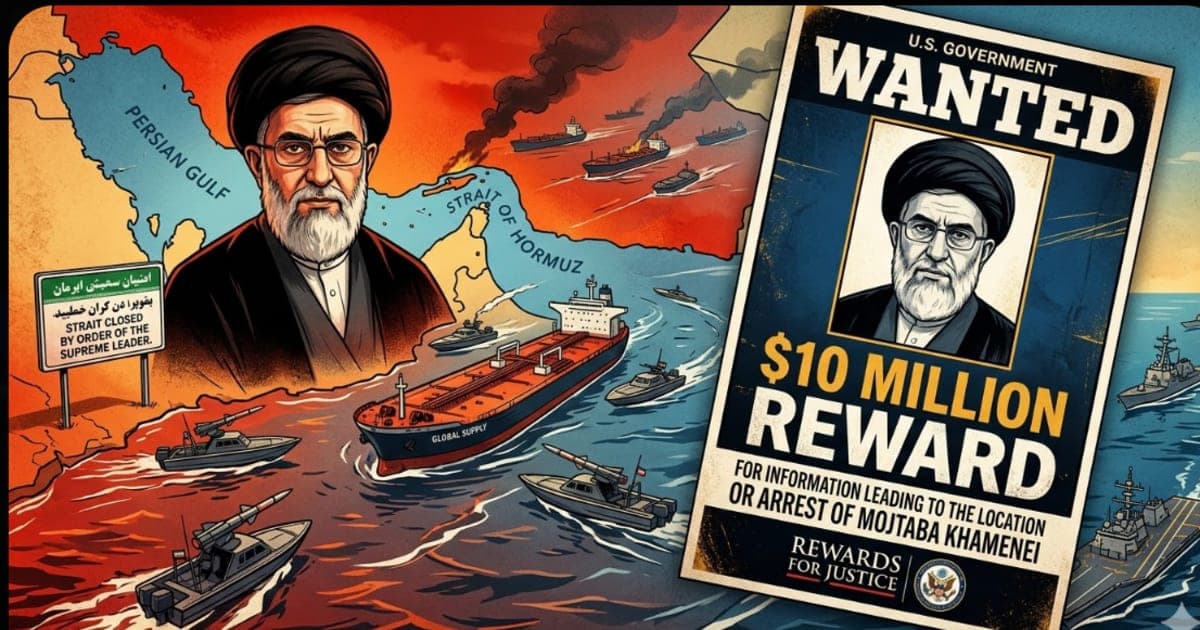
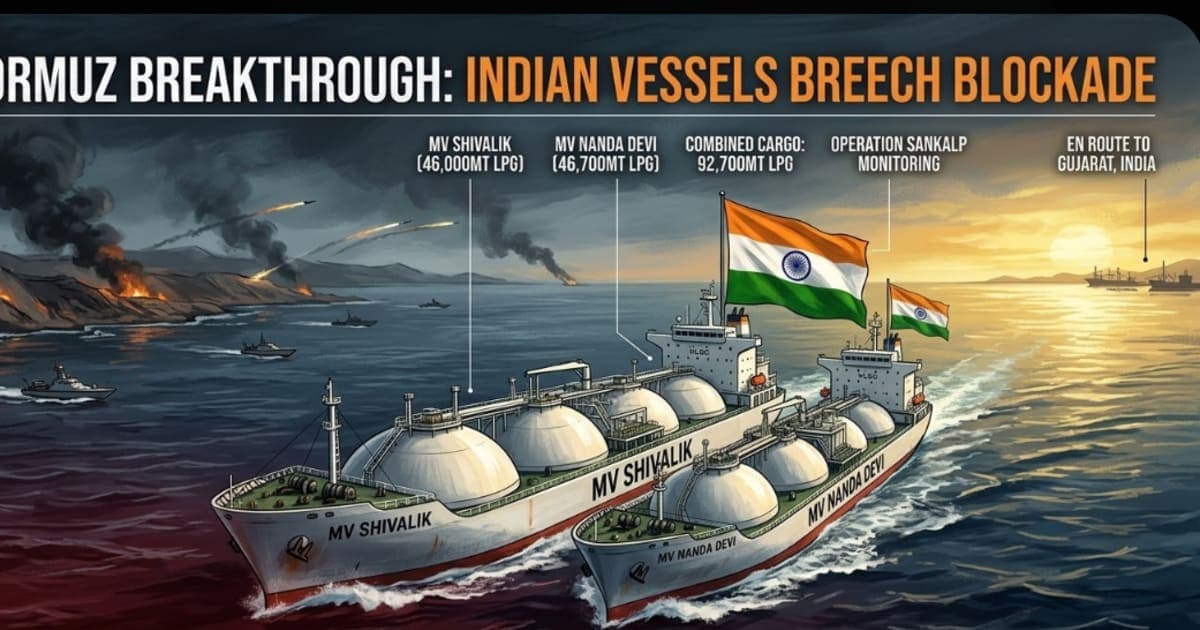
Days 4–6 (Mar 3–5): The Strait of Hormuz, already disrupted by the outbreak of hostilities, was effectively closed to commercial tanker traffic as ship insurers revoked war risk coverage. [web:283] Oil prices crossed $89 per barrel. Asian fuel traders began the desperate scramble for alternative supply routes.
Iran sought backchannel ceasefire talks with the CIA — privately, even as it publicly rejected negotiations. [web:280] The outreach went nowhere. Trump's position, relayed through intermediaries, was unconditional: dismantlement of nuclear infrastructure, no negotiations with the current leadership structure.
Oman's Foreign Minister — who had mediated all three pre-war negotiating rounds — publicly called for a ceasefire and said "off-ramps are available." [web:282] Neither Washington nor Tehran used them.
Days 7–9 (Mar 6–9): Iranian drone strikes hit Saudi Arabia's largest domestic airport, forcing temporary closure. [web:272] US Defense Secretary Pete Hegseth said the US is winning "decisively, devastatingly and without mercy" and announced additional jet fighters and bombers heading to the region. [web:276]
Iran's Assembly of Experts formally selected Mojtaba Khamenei — the late supreme leader's son — as the new Supreme Leader. [web:276] His first public statement refused any ceasefire. Iran's Foreign Minister told NBC that Iran is "confident" it could counter a US ground invasion. [web:273]
Spain, after Trump threatened to cut off trade, agreed to cooperate with US military operations. [web:276] The coalition is expanding.
The Ceasefire Question — Why It Isn't Happening
The basic structure of why this war cannot end quickly comes down to an unbridgeable gap in what each side calls "acceptable."
What the US demands: Permanent dismantlement of Iran's uranium enrichment program. No path to a nuclear weapon. New leadership structure in Tehran that Washington can work with. [web:271]
What Iran demands: An end to the strikes. Sanctions relief. Recognition of its right to peaceful nuclear technology. [web:270]
Those two positions have no overlap. Iran will not agree to permanently give up enrichment — it is the core of what the Islamic Republic has defended for 20 years. The US will not agree to a partial deal that leaves Iran with the infrastructure to rebuild a weapons program in six months.
The new Supreme Leader, Mojtaba Khamenei, is under enormous domestic pressure not to be seen as the leader who surrendered what his father spent his life defending. [web:276] Any ceasefire agreement he signs will be read domestically as capitulation.
Trump, meanwhile, has stated the operations could last "four to five more weeks" and that he is "prepared to go far longer than that." [web:276] The White House is reportedly "actively considering" a post-war US role in Iran's governance — a statement that signals regime change, not just nuclear disarmament, as the actual objective. [web:276]
What It Means for India — The Direct Impact Lines
India is not a party to this war. It is among its most exposed bystanders.
Fuel costs: Every day the Strait of Hormuz remains disrupted is another day of pressure on Indian OMCs. The 30-day US waiver for Russian crude expires April 3. If the war is still running — and it almost certainly will be — India faces a forced choice between absorbing enormous OMC losses or revising petrol and diesel prices upward. Petrol at ₹110–115 per litre is not an impossible scenario. LPG above ₹1,000 is likely. [web:276]
500,000 Indians in the Middle East: Half a million Indian nationals work in Gulf countries now facing Iranian drone and missile strikes. Every escalation puts them at risk. The Ministry of External Affairs is monitoring but has not ordered evacuations — a status that could change rapidly if a major Indian national casualty occurs.
Inflation: Oil prices feed into freight costs, which feed into food and goods prices. India's CPI, already elevated, faces an oil-driven push higher precisely when the RBI has been hoping to cut rates.
Trade and investment: Global uncertainty of this magnitude — a war involving the world's most powerful military and a major oil producer, with no clear end date — freezes investment decisions. FDI into India slows during extended geopolitical crises.
The Four Scenarios for How This Ends
Scenario 1 — Quick surrender (4–6 weeks): Iran's new leadership, under the weight of air campaign destruction and economic strangulation, agrees to US terms. Oil prices normalize. Most likely scenario according to Trump administration projections — and the least likely according to independent analysts.
Scenario 2 — Prolonged air war (2–4 months): Iran refuses to surrender but lacks the capability to meaningfully strike US assets. The war becomes a grinding air campaign. Oil prices stay elevated at $100–$120. Global recession risk rises sharply.
Scenario 3 — Regional escalation: Iran successfully draws Hezbollah, Yemen's Houthis, and Iraqi militias into a coordinated multi-front conflict. US forces take significant casualties. Public pressure in the US for de-escalation grows. This is the scenario that most frightens global markets.
Scenario 4 — Negotiated settlement: A third-party mediator — potentially involving China, India, or Turkey — creates a face-saving formula that gives Iran partial concessions while giving the US enough nuclear concessions to declare victory. Timeline: months, not weeks.
Right now, Scenario 2 is where the trajectory is pointing. Scenario 3 cannot be ruled out. [web:283]
What to Watch This Week
- New Supreme Leader's first major policy speech — Mojtaba Khamenei's public positioning will either harden or soften the ceasefire calculus
- Saudi Arabia's response to continued Iranian drone strikes on its territory — if Riyadh formally joins the coalition, the war's geography expands significantly
- Strait of Hormuz tanker movement data — any reopening of commercial traffic would immediately reduce oil prices
- US Congressional pushback — a growing number of Republican senators are asking questions about the legal authorization for war operations
- India's MEA statement on evacuation protocol — the government has been quiet; that silence may not hold much longer
The Iran war is not ending this week. It may not end this month. And every day it continues, the economic reverberations in India — at the fuel pump, at the grocery store, in the rupee's exchange rate — will be felt by ordinary people who have no say in what Washington or Tehran decides next.
Stay informed. The situation changes daily. And the next development — whatever it is — will matter.