India's Russian Oil Deal: What the US Waiver Means for Petrol Prices
NEW DELHI / WASHINGTON — Somewhere between Washington's sanctions desk and New Delhi's energy ministry, a quiet deal was struck this week that will determine what you pay at the petrol pump for the next 30 days.
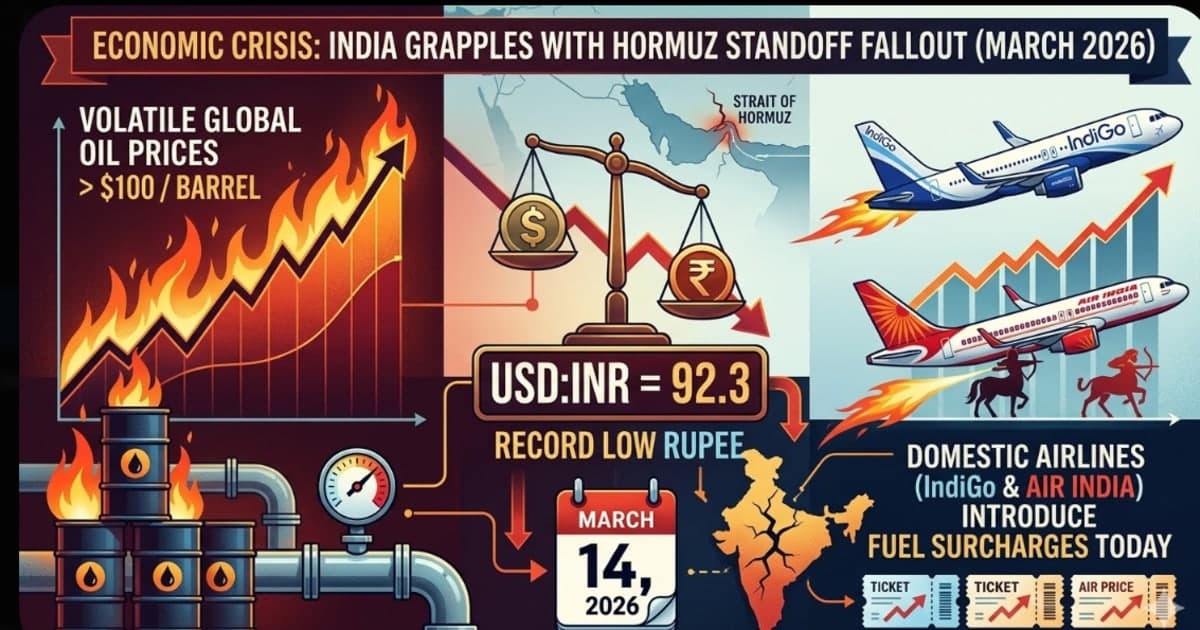
The United States has handed India a temporary 30-day waiver allowing it to keep buying Russian crude oil — effective until April 3, 2026. It's a pragmatic concession, and the timing says everything. With Operation Epic Fury now into its second week and the Strait of Hormuz largely shut to tanker traffic, Washington appears to have decided that stable Indian fuel prices matter more right now than isolating Moscow's energy revenues.
Brent Crude crossed $89 per barrel this week for the first time in years. That number is what's driving everything else.
The Waiver Washington Didn't Want to Give
The announcement followed a high-level digital summit between the U.S. State Department and India's Ministry of External Affairs. Publicly, Washington is still tightening sanctions on Russian energy globally. Privately, the math on cutting India off right now doesn't work.
India's traditional suppliers — Iraq, Saudi Arabia, the UAE — have all seen their shipment routes disrupted by the Iran conflict. Forcing India off Russian crude at this exact moment would pull an enormous volume of oil off the global market almost overnight, with nothing ready to replace it.
"This is not a permanent green light," a U.S. State Department spokesperson said carefully. "It is a 30-day window to ensure that one of the world's largest democracies does not face an energy collapse while we manage the kinetic situation in the Middle East."
Translation: Washington needed India to stay stable, and this was the price of that stability.
Why $89 Crude Is Rattling Everyone
Oil prices don't lie. The jump to $89 per barrel reflects three pressures hitting the market simultaneously.
- The Hormuz risk premium: War risk insurance rates for tankers have tripled since Day 1 of the Iran conflict, making every Middle Eastern shipment significantly more expensive before a single barrel is loaded
- Refinery panic buying: Fears of retaliatory strikes on Gulf refineries have sent European and Asian buyers scrambling to lock in supply, driving spot prices higher
- SPR hesitation: The U.S. and other major economies are holding back on releasing Strategic Petroleum Reserves until they have a clearer read on how long the Iran campaign will last
Each of these factors feeds the others. The result is a market running on anxiety as much as actual supply data.
What This Means at Your Petrol Pump
Here's the part that matters to anyone filling up a scooter in Mumbai or a car in Jaipur.
| Metric | Pre-Conflict (Feb 2026) | Current (Mar 7, 2026) | With Russian Waiver | Without Waiver |
|---|---|---|---|---|
| Global Crude | $74/bbl | $89/bbl | ~$72/bbl effective | $89+/bbl |
| Petrol Price Delhi | ₹96.72 | ₹98.50* | Target: ₹98–₹101 | Estimated: ₹112+ |
Current prices are being held steady through government-directed buffer pricing.
India buys Russian Urals crude at a $15–$17 discount to Brent. That discount is what keeps the weighted average cost for Indian refiners manageable. Without it, OMCs would be buying spot oil at $89 or higher — and to avoid bleeding money, they'd have no choice but to pass on a ₹12 to ₹15 per litre hike almost immediately.
The waiver, in practical terms, is worth about ₹12–₹15 per litre to every Indian fuel consumer right now.
The April 3 Cliff
The waiver doesn't last forever, and the deadline isn't random. April 3 lines up with what the Pentagon is calling a projected "stabilization phase" for the Iran conflict. Two very different scenarios play out from here.
If the war winds down: Washington may let the waiver expire and expect India to gradually return to Middle Eastern suppliers as those routes reopen. No renewal, no drama — just a return to the old normal.
If the war drags on: The U.S. faces a genuinely uncomfortable choice. Renew the waiver and keep underwriting India's Russian oil purchases, or watch one of Asia's largest economies absorb a fuel shock that could push domestic inflation past 20%. Neither option is comfortable from Washington's perspective.
India's government isn't waiting around to find out which scenario plays out.
India's 30-Day Scramble
The Petroleum Ministry has been blunt about the priority: India's 1.4 billion consumers come first. Behind the scenes, the government is moving on three fronts simultaneously.
- Front-loading imports: Getting as many Russian tanker departures locked in before April 3 as physically possible, building a buffer that outlasts the waiver itself
- Ethanol blending push: Raising the ethanol blending mandate to 25% in select regions to stretch existing petrol stocks further
- Northern Sea Route exploration: Mapping out logistics for Russian oil shipments through Arctic waters, bypassing the Mediterranean and Middle Eastern chokepoints entirely
It's a hedge against every possible outcome — and a signal that New Delhi isn't counting on Washington to extend a lifeline it was reluctant to offer the first time.
For the next 30 days, the price you pay at the pump is being held in place by a fragile three-way understanding between Washington, Moscow, and New Delhi. It's working — for now. What happens after April 3 depends on a war that nobody fully controls.