CEM India Expo 2026: Why Delhi Is Hosting
India's Most Urgent Environmental Event This March
Step outside in Delhi at 7 AM any winter morning.
You don't need an AQI app to know something's wrong.
The haze sits low. Eyes water before you reach your car.
Kids' schools send WhatsApp blasts — no outdoor activity today.
Your throat knows the score before your brain catches up.
This isn't fog. This isn't bad luck.
This is what 30 years of unmonitored industrial emissions
looks like when it finally runs out of sky to hide in.
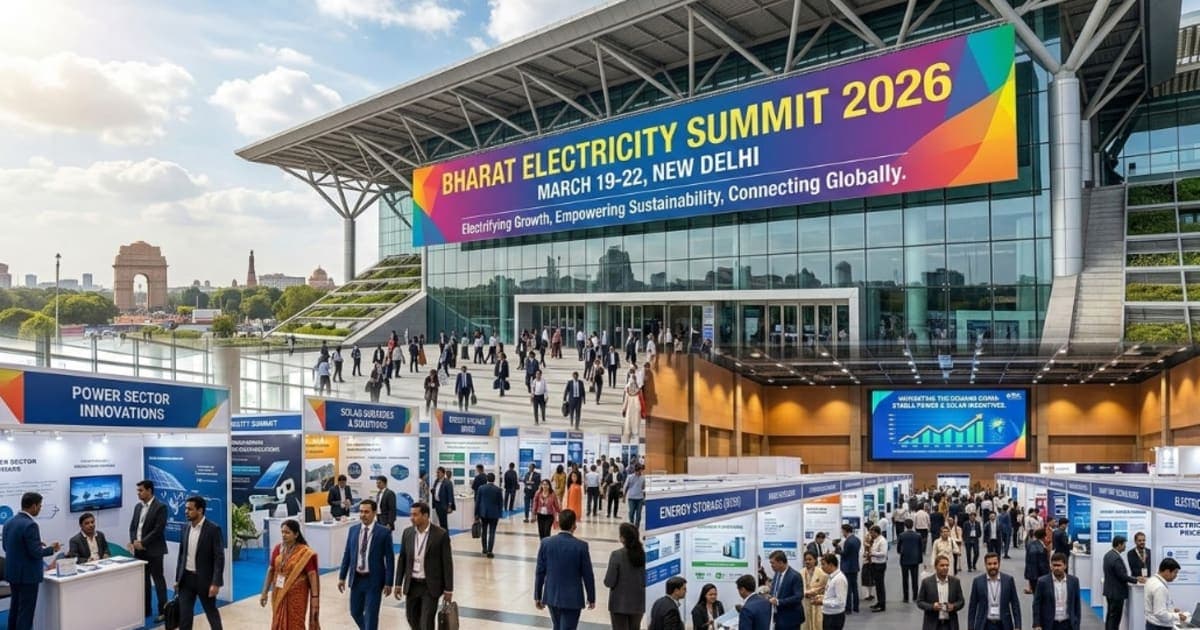
CEM India Expo 2026 lands at Pragati Maidan on March 10th.
Three days. One hall. One question that India can't dodge anymore:
Are we actually measuring what's coming out of our factory chimneys?
Spoiler: we weren't. Now we have to.
What This Event Actually Is
Forget what you picture when someone says "industry expo."
No ribbon-cutting politicians reading prepared remarks.
No carpet and canapés for people who already know each other.
This is closer to a fire drill — except the building's already on fire.
On one side of that hall: engineers and companies
who build the machines that measure what smokestacks release.
German laser analyzers. Japanese electrochemical sensors.
Bengaluru startups building the same thing at half the cost.
Two hundred booths of hardware, software, and data systems
that didn't exist in India's mainstream industrial market
five years ago.
On the other side: the people who desperately need it.
Plant managers from power stations in Jharkhand.
Compliance heads from cement plants in Rajasthan.
Engineers from steel mills in Odisha
who've been handed a CPCB deadline
and a budget that doesn't quite match it.
In the middle: regulators, consultants, policy writers
trying to connect a government order
with physical, financial, industrial reality.
That gap — between mandate and execution —
is exactly what CEM India 2026 exists to close.
Why CPCB Finally Lost Its Patience
Here's how emissions monitoring worked in India for decades.
Once a quarter, a technician climbed your smokestack.
Collected a bag of gas. Shipped it to a lab.
Waited two, sometimes three weeks for results.
By that time? The coal batch had changed.
The boiler was running differently.
The supervisor who'd been gaming the output
had filed his quarterly report and gone on leave.
The numbers came back. They looked acceptable.
The regulator ticked a box.
The smoke kept pouring out.
Everyone in the system knew the data was garbage.
Nobody said it out loud because the alternative
meant spending money nobody had budgeted for.
Then CPCB said: enough.
Hard mandate. No extensions.
Power plants, cement factories, steel mills, chemical units —
every major polluting industry installs permanent, live CEMS
streaming data directly to regulatory servers.
Not quarterly. Not monthly.
Every thirty seconds.
NOx. SO2. CO2. Particulate count.
Live. Verified. Tamper-evident.
Install by December 2027 or shut down.
That order dropped on 5,000-plus industrial units
who suddenly had the same three panicked questions:
What do I actually buy? Who installs it properly?
And God help me, how much is this going to cost?
CEM India 2026 answers all three.
Why Delhi and Why March
The organisers didn't spin a globe and stab a finger at the map.
They picked the city that makes the stakes physically impossible to ignore.
Delhi's winters are a public health crisis with a PR problem.
AQI of 350. Schools shut. Supreme Court ringing alarm bells.
Odd-even vehicle schemes. GRAP emergency protocols.
The government has tried everything
except the one thing that has to come first:
knowing exactly which chimney is doing the damage.
Right now, India's regulators know the broad picture.
Industries contribute. Vehicles contribute.
Crop burning in Punjab and Haryana contributes.
Construction dust contributes.
But without real-time stack data from every major plant,
you're fighting a fire with a blindfold on.
You ban trucks on a Tuesday when the actual problem
is a cement kiln 40 kilometres west running dirty coal
with nobody watching.
Permanent CEMS changes the equation completely.
Every major stack. Every 30 seconds.
Data streaming live. No hiding. No delays. No faking.
Delhi hosting this expo is a deliberate statement.
The city that suffers most from the problem
is where the people building the solution show up.
March, specifically, matters too.
Post-winter. The AQI's come down enough
that people aren't in full emergency mode.
But the memory of November and December is fresh enough
that nobody in that hall needs convincing
that this work matters.
What Three Days at Pragati Maidan Looks Like
The Exhibition Floor
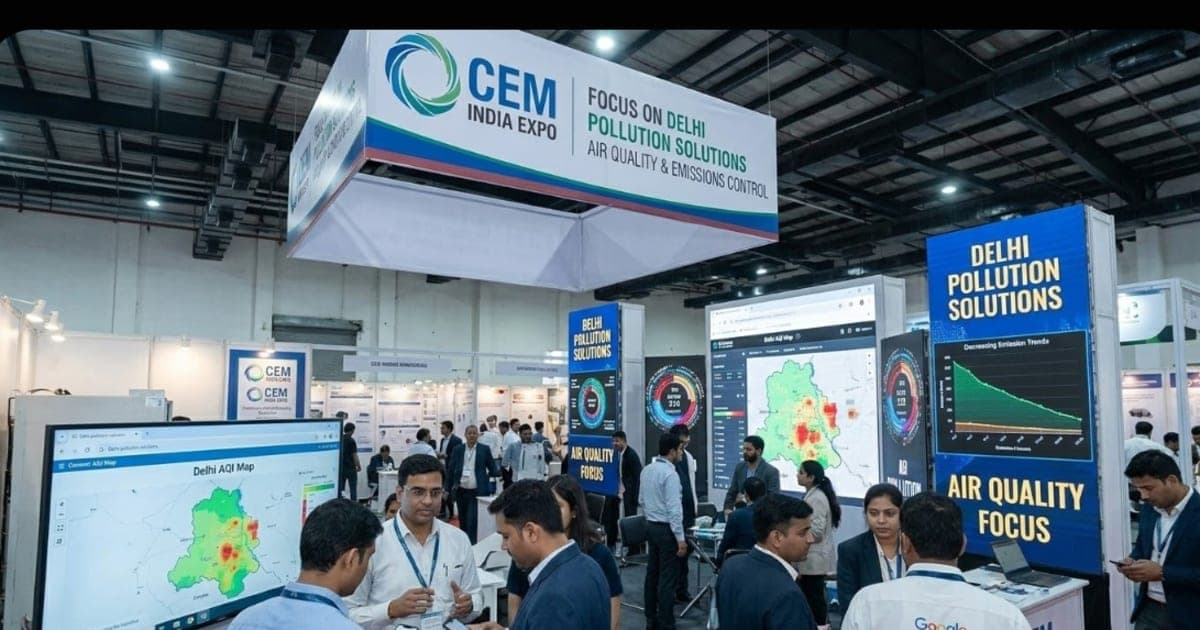
Walk in and you'll see 200-plus booths
arranged like a serious procurement bazaar.
Laser-based extractive analyzers from German firms
that have been doing this for 40 years.
In situ optical systems from Japanese manufacturers
that mount directly on the flue without sample extraction.
Electrochemical cell units from Indian companies
that have quietly gotten very, very good.
Price range?
₹8 lakh for a small boiler compliance setup.
₹3 crore for a 500 MW thermal plant installation.
And — this is new and important —
CEMS-as-a-Service rental models
for MSME units who can't write a ₹1.5 crore cheque
but still have a compliance deadline staring them down.
The Technical Sessions
Not keynotes. Not applause lines.
Hard, working sessions with real arguments in them.
Engineers debating whether optical or electrochemical
handles high-ash Indian coal better in the long run.
Regulators explaining precisely what data format
CPCB's servers accept and what gets flagged as invalid.
Consultants walking through QA/QC protocols
so a plant manager doesn't spend ₹80 lakh on a system
that fails its first certification audit.
These sessions exist because the compliance gap in India
isn't always willful. Sometimes it's genuine confusion.
Nobody explained the specs clearly.
Nobody mapped the procurement process end to end.
These three days do that.
Live Stack Demonstrations
Actual analyzers running on combustion simulation rigs.
Watch what happens to NOx readings
when you shift the air-fuel ratio by 5 percent.
See AI-powered anomaly detection flag
a suspicious flatline in a data stream
that a human reviewer would have missed.
One showcase that's generating real buzz beforehand:
drone-mounted gas analyzers
doing mock stack inspections without scaffolding.
No crew. No setup time. Instant readings.
If that works at scale, it changes enforcement completely.
The Startup Corner
This is the section that serious investors
should spend disproportionate time in.
Indian CEMS startups — Bengaluru, Hyderabad, Pune —
showing systems that match European technical specs
at 35-40 percent lower cost.
Some of them are already supplying
four or five industrial clients quietly.
None of them have had a national stage before.
Make in India in environmental tech
isn't a slogan here. It's a working business model
that's about to scale very fast.
Who Needs to Be in That Hall
Plant managers and compliance heads:
Your deadline is December 2027.
That sounds far. It isn't.
Procurement takes three months.
Installation takes four.
Calibration and CPCB certification: another three.
You're already behind if you haven't started.
Three days here compresses six months of confusion
into structured, actionable decisions.
MSME operators under cost pressure:
The rental CEMS option is real.
₹40,000-60,000 per month.
Full compliance, no capital expenditure,
maintenance included.
Find those vendors here before your competitor does.
Investors and market analysts:
₹10,000 crore market just activated overnight.
Every major polluting industry in India is a mandatory buyer.
The companies in that startup corner
are not hypothetical — they have clients,
they have traction, and they have a regulatory tailwind
that isn't going away.
Journalists and policy watchers:
The conversation in those technical sessions
will shape India's emissions regulation framework
for the next decade.
The arguments being settled here in March
will show up in CPCB circulars by year end.
The Bigger Thing At Stake
If CEM India 2026 lands the way it should —
if it genuinely connects buyers to working technology,
accelerates industrial CEMS rollout,
and builds real confidence in data integrity —
the downstream effects aren't abstract.
Analysts who track this space seriously
have put a number on it:
80 percent stack monitoring coverage
across India's major industrial polluters
could reduce Delhi's winter AQI
by 30 to 40 points within three years.
Not a solution. But measurable, verifiable progress.
Progress that you can track because — finally —
you have the data to track it with.
More than the numbers, though,
it shifts how India talks about pollution.
No more political blame cycles.
No more "it's the farmers" vs "it's the factories."
No more annual news stories about Delhi air
that generate outrage for two weeks
and change nothing for two years.
When every major stack has a live monitor,
the data tells the truth whether anyone wants it to or not.
That accountability — boring, technical, unglamorous —
is what actually cleans the air.
That's what's really on the line at Pragati Maidan.
Not the hardware. Not the compliance checklists.
Not even the CPCB deadline.
It's 30 years of guessing
coming to an end.
March 10th. Delhi. The expo India's lungs have been waiting for.
CEM India Expo 2026 runs March 10-12
at Pragati Maidan, New Delhi.
Registration open at cemindiaexpo.in