iPhone 17e Review: The $599 iPhone That Makes the $799 Model Hard to Justify
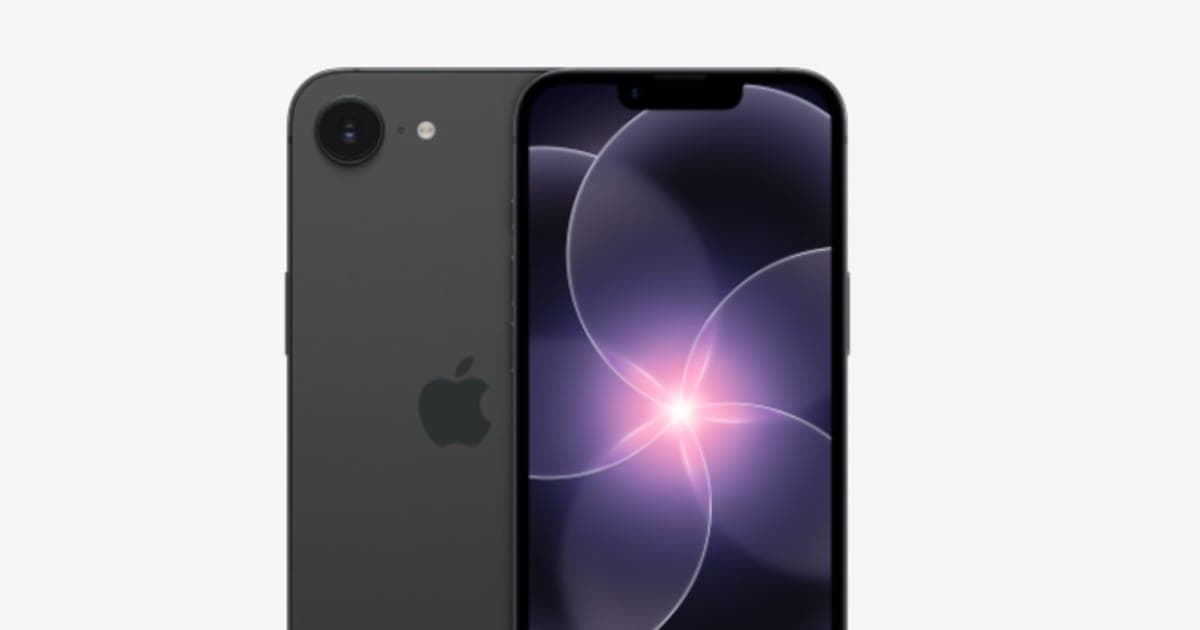
Apple launched the iPhone 17e in early March 2026 at $599 in the US and ₹64,900 in India. And the conversation it's started is the most interesting one in smartphones this year — not because it's the most powerful phone Apple makes, but because it might be the smartest one.
Here's the full picture.
The Part Nobody Expected — The A19 Chip
Previous SE and "e" models always came with a catch: flagship design, last year's chip. Apple used the affordable price point as cover for slipping in older silicon. The iPhone 16e had the A16. The SE 3 had the A15.
The 17e has the A19. The same chip in the iPhone 17 and iPhone 17 Pro.
That's not a small thing. That's Apple saying — for the first time with this line — that the entry point gets the current engine, not a hand-me-down. The A19 is built on a 3nm process, has a 6-core CPU, and packs a 16-core Neural Engine. The only difference versus the standard iPhone 17's chip is one GPU core — four here versus five there. In real-world usage, for anything that isn't demanding 3D gaming, you will never notice that difference.
What this means practically: every Apple Intelligence feature runs at full speed on the 17e. The writing tools, the image generation, the upgraded Siri, Clean Up in Photos — none of it is watered down. You're not buying an "AI-lite" iPhone. You're buying the real thing at $200 less.
The Camera — One Lens That Pretends to Be Two
Single rear camera. That's the spec that makes people nervous, and understandably so. But this isn't the single 12MP lens from three years ago.
The 17e has a 48MP Fusion camera at f/1.6 with second-generation sensor-shift OIS. Because it's shooting at 48 megapixels, Apple's computational photography can crop the centre of the frame to produce a genuine 2x optical-quality zoom — no digital stretching, no quality loss. So in practice, you get 1x and 2x as real shooting options.
What you don't get: ultra-wide, macro, and anything beyond 2x. If you shoot architecture, landscapes, or food flat-lays regularly, the missing ultra-wide will bother you. If you mostly photograph people, street scenes, and everyday life, you will be completely fine.
Video is 4K Dolby Vision up to 60fps. Front camera is 12MP with autofocus and 4K. Low-light performance is strong because the A19's Photonic Engine does heavy lifting. For 90% of people's photography habits, this camera is genuinely excellent.
The Three Trade-offs Apple Made
Apple didn't hide what they cut to hit $599. Here's what's actually different:
60Hz display instead of 120Hz. The screen itself is a 6.1-inch Super Retina XDR OLED — beautiful, accurate, perfectly good. But it refreshes at 60Hz instead of ProMotion's 120Hz. Scrolling feels slightly less fluid, animations are less buttery. If you've been using a 120Hz phone for two years, you'll notice. If you're coming from an older iPhone or a mid-range Android, you won't.
Notch instead of Dynamic Island. The classic pill-shaped notch is back for Face ID and the TrueDepth camera. No Camera Control button either. The Dynamic Island on the iPhone 17 is genuinely useful for live activity notifications — music controls, navigation, sports scores. Missing it is a real loss for people who use those features constantly.
Wi-Fi 6 instead of Wi-Fi 7. Honest take: this doesn't matter for most people right now. Wi-Fi 7 routers are still niche. In two or three years when Wi-Fi 7 is everywhere, iPhone 17 owners will have an edge. But today, in your home or office, you won't notice.
What Apple Actually Got Right
256GB base storage. For the first time, an entry-level iPhone doesn't start at 128GB. The 17e starts at 256GB at the same price the 16e started at 128GB. That's meaningful — especially for people who've been fighting iCloud upsell prompts for three years.
MagSafe. The "e" line finally gets it. 15W wireless charging, full MagSafe accessory compatibility — cases, wallets, charging pads. This was a glaring omission in previous models and Apple fixed it.
Battery life. Up to 26 hours of video playback. The 17e is an all-day phone without anxiety. For comparison, the standard iPhone 17 gets 30 hours — but going from 26 to 30 hours of video playback doesn't matter when both are already more than enough for a full day of real use.
IP68. Ceramic Shield 2. Aerospace aluminum frame. This is a premium-feeling, properly durable phone. Nothing about it feels budget.
iPhone 17e vs iPhone 17 — The Honest Comparison
| What You're Comparing | iPhone 17e | iPhone 17 | Does It Actually Matter? |
|---|---|---|---|
| Price (India) | ₹64,900 | ₹82,900 | ₹18,000 difference — yes, always matters |
| Price (US) | $599 | $799 | $200 difference |
| Chip | A19 (4-core GPU) | A19 (5-core GPU) | Almost never in daily use |
| Display | 6.1" 60Hz OLED, Notch | 6.3" 120Hz ProMotion, Dynamic Island | Noticeable if you use it side by side |
| Rear cameras | 1x + 2x (single 48MP) | 1x + 2x + ultra-wide + macro | Matters a lot for certain shooters |
| Front camera | 12MP | 18MP with Center Stage | Matters for video callers |
| Battery | 26 hrs video | 30 hrs video | Both are fine for all-day use |
| Wi-Fi | Wi-Fi 6 | Wi-Fi 7 | Doesn't matter much today |
| Base storage | 256GB | 256GB | Same |
| MagSafe | Yes | Yes | Same |
The 17 is a better phone. That's not debatable. But is it ₹18,000 better? For most people — honestly, no.
The gap that matters is the camera — specifically the ultra-wide. If you use ultra-wide regularly, spend the extra money. If you don't, the 17e is the smarter purchase.
Who Should Buy the 17e
Buy the 17e if: You want a fast, durable, future-proof iPhone for daily life — calls, social media, photos of people, streaming, messaging — and you'd rather keep ₹18,000 in your pocket.
Buy the iPhone 17 if: You shoot ultra-wide or macro photography regularly, you play demanding 3D games where 120Hz and the extra GPU core matter, you work in bright outdoor conditions where 3000 nits of brightness is genuinely useful, or Dynamic Island's live activity notifications are part of how you use your phone.
For everyone else: the 17e is enough. More than enough, actually.
Price, Pre-orders and Where to Buy
Pre-orders opened March 4 in India and the US. Open sales begin March 11, 2026 — which is tomorrow as you're reading this.
In India: Apple.com, Apple Retail Store (BKC Mumbai, Saket Delhi), Reliance Digital, Croma, Vijay Sales, Airtel, Jio, Vi stores, Amazon, Flipkart
In the US: Apple.com, Apple Stores, Best Buy, Target, all major carriers — AT&T, Verizon, T-Mobile all have trade-in deals running that can bring the effective price significantly lower
Colors: Black, White, Soft Pink — all with a matte finish on the back
Storage options: 256GB (₹64,900 / $599) and 512GB (₹74,900 / $699)
Apple's trade-in program is currently offering up to ₹22,000 for an iPhone 12 in good condition and up to ₹38,000 for an iPhone 14 — which makes the 17e's effective price for existing iPhone users considerably lower than the sticker price.
The Bottom Line
The iPhone 17e is the first time Apple has genuinely built an entry-level iPhone that doesn't feel like a compromise. The A19 chip, 256GB storage, MagSafe, and a proper 48MP camera — at ₹64,900 — is a combination that didn't exist twelve months ago at this price.
The 60Hz display and single camera are real limitations. They're not dealbreakers for most people — but they're real.
If you've been waiting for an iPhone that gives you the full Apple Intelligence experience, flagship performance, and enough storage to stop worrying, without spending ₹82,900 for the standard model — the 17e is what you've been waiting for.
It goes on sale tomorrow. The stock situation in India for launch week is going to be tight. If you've decided, order tonight.