Cars are practically driving themselves right now. AI is booking your meetings. Someone is genuinely planning to go to Mars.
And yet — the most effective way to communicate Monday morning suffering in India, in 2026, is still a pixelated screenshot of Paresh Rawal looking skyward from a film that released when half the people sharing it were in primary school.
There's something deeply right about that.
The Indian internet doesn't need new content. It needs the correct content, deployed at the correct moment with the correct level of desperation. Bollywood gave us two decades of material that accidentally doubles as an emotional support system. We are, collectively, still using it. Probably forever.
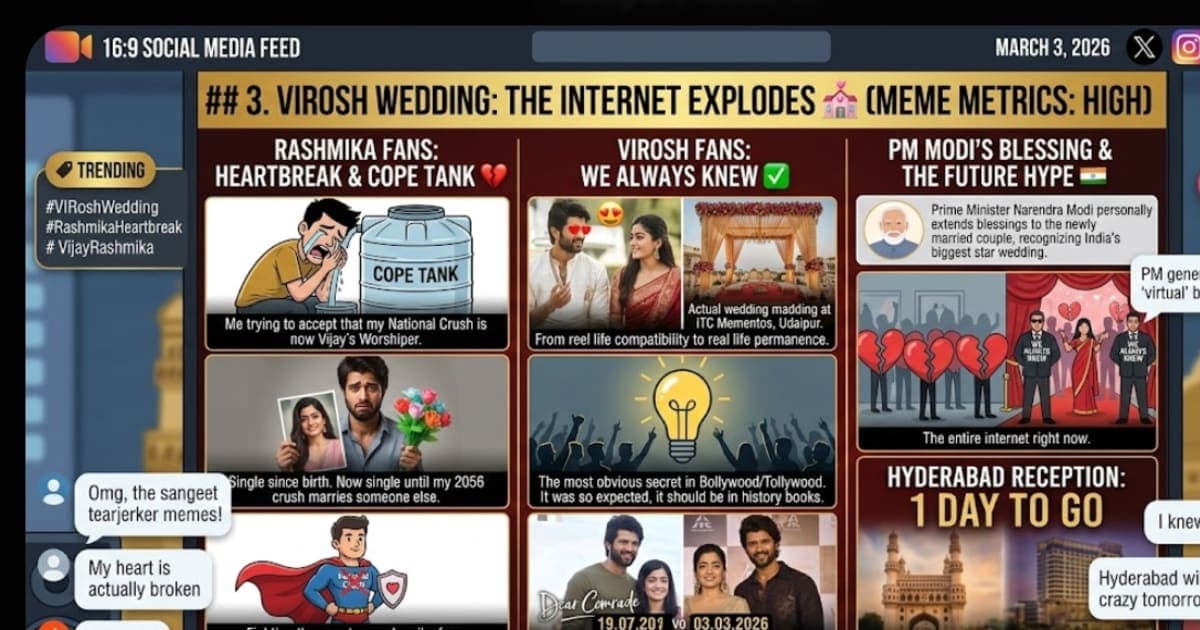
Here are the three meme trends dominating the Indian internet right now — and why they keep working.
Phir Hera Pheri Is the Only Honest Monday Diary
Nobody has explained the lived experience of salaried employment better than Raju, Shyam, and Babu Rao Ganpatrao Apte. Not philosophers. Not self-help authors. Not that one LinkedIn post about hustle culture that your college senior keeps sharing. Babu Bhaiya. That's who understood us.
The Monday meme cycle built around Phir Hera Pheri is so accurate at this point that it has stopped being parody and started being journalism. It runs like clockwork every week.
Sunday, 10 PM — The Realization
You're watching something. You're relaxed. Life is fine. And then the thought arrives, completely uninvited: 9 AM stand-up tomorrow.
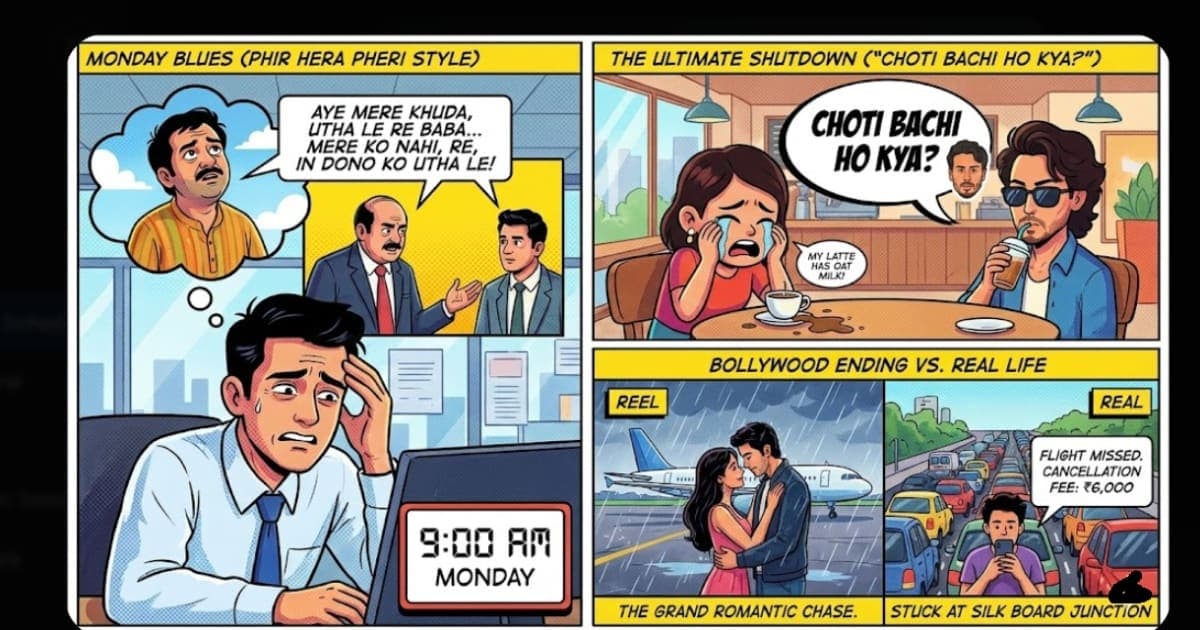
The meme: Babu Bhaiya looking up at the sky, "Aye mere khuda, utha le re baba... mere ko nahi re, in dono ko utha le!" Where in dono has been universally reinterpreted as your manager and whoever schedules meetings for before 10 AM.
Monday, 7 AM — The Snooze
Fifth alarm. Dark room. You are conducting a serious, private cost-benefit analysis of whether a minor but credible-sounding illness could realistically get you out of logging in today.
The meme: Johnny Lever, maximally chaotic, "Abhi mazaa aayega na bhidu!" Posted by millions of people sitting in traffic with exactly zero mazaa in the immediate vicinity.
Monday, 9:05 AM — The Email
You've barely opened your laptop and there it is. "Hi, can we get a quick update on this? High priority." The spreadsheet in question does not exist yet.
The meme: Babu Bhaiya, the telephone scene, the absolute controlled fury of "Tera toh game bajana padega." This one gets reshared with no caption. No caption is needed.
Monday, 11 AM — The Delusion
Coffee. Slight calm. The irrational but comforting thought: if I just grind hard this week, the promotion is basically confirmed.
The meme: Raju. Sunglasses. The lean. "Paisa hi paisa hoga."
We know it's a lie. Raju knew it was a lie. That's exactly why it works.
"Choti Bachi Ho Kya?" Has Become a Life Philosophy
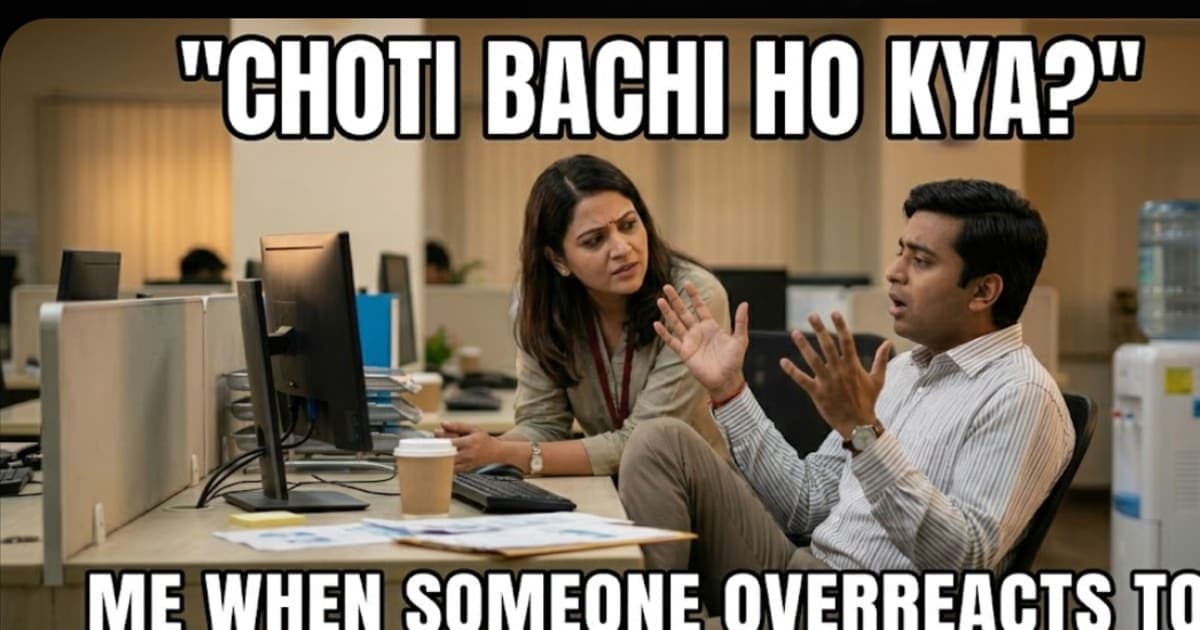
Tiger Shroff delivered that line in Heropanti with an intensity that was, at the time, mostly unintentionally funny. Slightly squeaky. Very sincere. Completely committed. The internet laughed. Then moved on.
And then, years later, the internet came back. Not to laugh at the scene — to use it. As a tool. A fully functioning, deployable weapon for managing the epidemic of adult dramatics that defines modern group living.
The thing is, modern life is stressful, and when people are stressed, they become dramatic about things that are objectively very small. The oregano packet that didn't arrive with the pizza. The Wi-Fi that went out for forty-five seconds. The fact that the office air conditioning is set to a temperature that is, technically, survivable.
Choti bachi ho kya?
It's not mean, exactly. It's just calibrating. Gently suggesting that the level of distress being expressed might be slightly mismatched to the scale of the problem.
The roommate version: Full emotional breakdown because the Blinkit order is running seven minutes late. Your response: a deep-fried, aggressively zoomed-in Tiger Shroff GIF. Delivered without comment.
The office version: Colleague sighs aggressively, informs the general area that the meeting that could have been an email has destroyed their entire workflow. Internal response: Choti bachi ho kya? External response: a sympathetic nod.
The personal version: You stub your toe on the coffee table and spend the next ninety seconds genuinely questioning the nature of suffering. Your own brain, eventually: Choti bachi ho kya?
This dialogue has done something that most memes never manage — it became genuinely useful. It's the desi "OK Boomer." Delivered correctly, it ends conversations. Delivered incorrectly, it starts arguments. Either way, it's doing something.
Bollywood Endings vs. What Actually Happens to Us
For decades, Bollywood told us certain things were true. Grand public declarations fix relationships. Running through airports is romantic and logistically viable. A single passionate speech can change the minds of an entire boardroom of powerful people. Family feuds resolve themselves at weddings.
The internet has decided, collectively and firmly, that this was all a lie. And it's been making memes about that lie with increasing precision.
The format is simple: Bollywood Ending on one side. Real Life Ending on the other. The gap between them is where the comedy lives.
The Airport Scene
Bollywood: Hero realizes his mistake. Breaks six traffic laws. Bypasses CISF security through unclear means. Runs across the tarmac. Stops a commercial aircraft. Confesses his love. Heroine exits the plane. Other passengers applaud. Fade to beautiful sunset.
Real life: You get stuck at Silk Board junction for forty minutes. Then Saki Naka for another thirty. You miss the flight. The airline charges ₹6,000 for the cancellation. You go home. You eat cold Maggi. You do not call anyone. You go to sleep.
The Boardroom Speech
Bollywood: Underdog storms in, delivers three-minute speech dripping with integrity and passion. Powerful men in expensive suits are visibly moved. They offer him the CEO position on the spot. Everyone shakes hands. Swelling background score.
Real life: You spend three nights on the presentation. You present it. Your manager looks at slide fourteen and says the font is slightly off. He says he wants to "circle back on the core concepts next quarter." You go back to your desk. You fix the font. You don't hear about it again.
The Family Resolution
Bollywood: Fifteen years of property disputes, complicated grievances, and generational resentment resolved in one five-minute scene at a destination wedding. The patriarch drops his walking stick. Everyone cries and hugs. Healed.
Real life: You have been on read by a distant relative since a WhatsApp argument in 2021. The blue ticks remain. Nobody has addressed it. Nobody will address it. The family group chat continues to function around this silence as though it is simply geography.
Why We Keep Coming Back to This
None of this is really about the movies.
It's about the gap — the specific, universal, deeply Indian gap between what we were told to expect from life and what life actually delivers. Bollywood gave us a version of the world where passion wins, love conquers logistics, and hard work is rewarded by exactly the kind of dramatic, visible success it deserves.
The memes are just us, together, going: "That didn't happen for me either. Did it happen for you? No? Cool."
There's genuine comfort in that. Not because it fixes anything. But because when you post the Babu Bhaiya meme at 9 PM on Sunday and it gets three hundred reshares in twenty minutes — at least you know you're not suffering alone.
Which is, honestly, all any of us are really asking for.
This article is a cultural commentary piece on Indian internet meme culture. All film references and dialogues are cited for cultural analysis purposes.