Best Electric Scooters Under ₹1 Lakh in India (2026): What to Buy, Who It’s For, and What to Skip
If you’re thinking about an electric scooter this summer, you’re probably thinking about one thing first: petrol.
Even a “normal” month of running errands and commuting can turn into a steady fuel bill that feels like a subscription you never agreed to.
The good part: under ₹1 lakh is no longer the zone of slow, flimsy EVs. In 2026, you can buy a proper, daily-use electric scooter here—if you choose based on how you live (parking, charging access, roads), not just range claims.
Quick picks (choose your type)
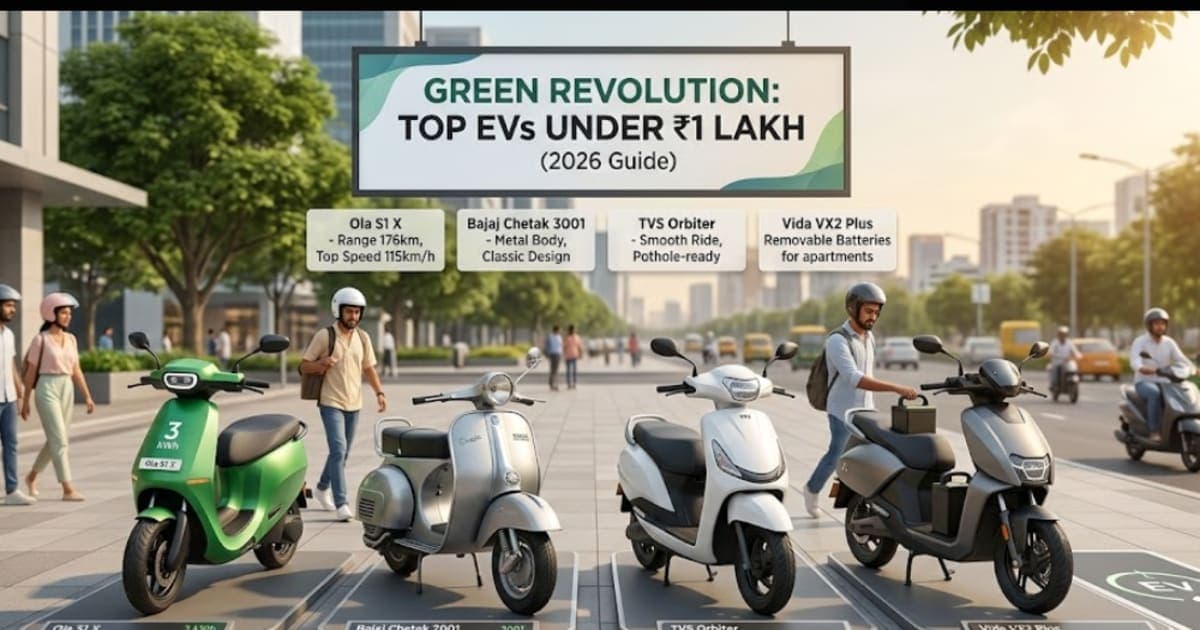
- Want the fastest, most “specs for money” scooter? Go Ola S1 X.
- Want a solid, family-friendly scooter that feels built to take abuse? Look at Bajaj Chetak.
- Live in an apartment and can’t charge in parking? Vida makes your life easier.
- Want comfort + predictable service support? TVS iQube is the calm choice.
1) Ola S1 X: For people who hate slow scooters
This is the scooter you buy when you’re done being overtaken by everything on a flyover.
It’s quick, it feels like it has more punch than most commuters actually need, and it’s the easiest way to get “big numbers” under ₹1 lakh.
Where it fits:
- Longer commutes where you need speed to stay with traffic
- Riders who care more about performance than a premium feel
Where it annoys:
- If you’re the kind of person who forgets to charge at night, you’ll hate yourself in the morning.
2) Bajaj Chetak: For families who want “solid”, not flashy
Some people don’t want a scooter that feels like a phone with wheels. They want a scooter that feels like a scooter.
That’s the Chetak vibe: stable, planted, mature.
Where it fits:
- Family use (multiple riders)
- People who value brand trust and durability over top speed
Where it annoys:
- If you want to cruise fast, you’ll feel limited.
3) Vida: The apartment-charging problem solver
If your parking slot doesn’t have a plug point, most EV advice becomes useless.
Vida is the one that makes sense for apartment life because the batteries can be removed and charged indoors.
Where it fits:
- Renters
- People with basement parking and no charging access
Where it annoys:
- Carrying batteries isn’t “hard,” but it’s not fun either—especially daily.
4) TVS iQube: The comfort pick (and the least stressful ownership)
Not everyone wants the fastest scooter. Most people want a scooter that starts every day, rides well on broken roads, and has service support that doesn’t turn into a personal project.
Where it fits:
- Bad roads, speed breakers, potholes
- Buyers who want peace of mind more than features
Where it annoys:
- If you love aggressive acceleration, you’ll find it… polite.
The 3 checks that matter more than claimed range
1) Charging access beats battery size
If you can’t charge easily where you park, even the “best” scooter becomes a headache.
2) Service network is part of the product
A great scooter with weak service is not a great scooter. It’s a future argument.
3) Your real commute decides your real range
If your daily use is stop-go traffic + potholes + a pillion, your real-world range won’t match brochure numbers. Plan with a buffer, not optimism.
Real running cost: why people switch
A petrol scooter’s cost hits you daily. EV cost hits you quietly.
- Petrol: you feel it at every refill.
- EV: you notice it when you realise you haven’t visited a petrol pump in weeks.
If you tell me your daily km and electricity rate, I’ll calculate a clean break-even estimate for your case.
FAQs people don’t ask (but should)
Do I need fast charging? Not if you can charge overnight reliably.
Will summer heat reduce range? Yes, especially if you ride hard and park in direct sun.
Should I wait for “new models”? If you’re buying around subsidy deadlines, waiting can cost more than it saves.